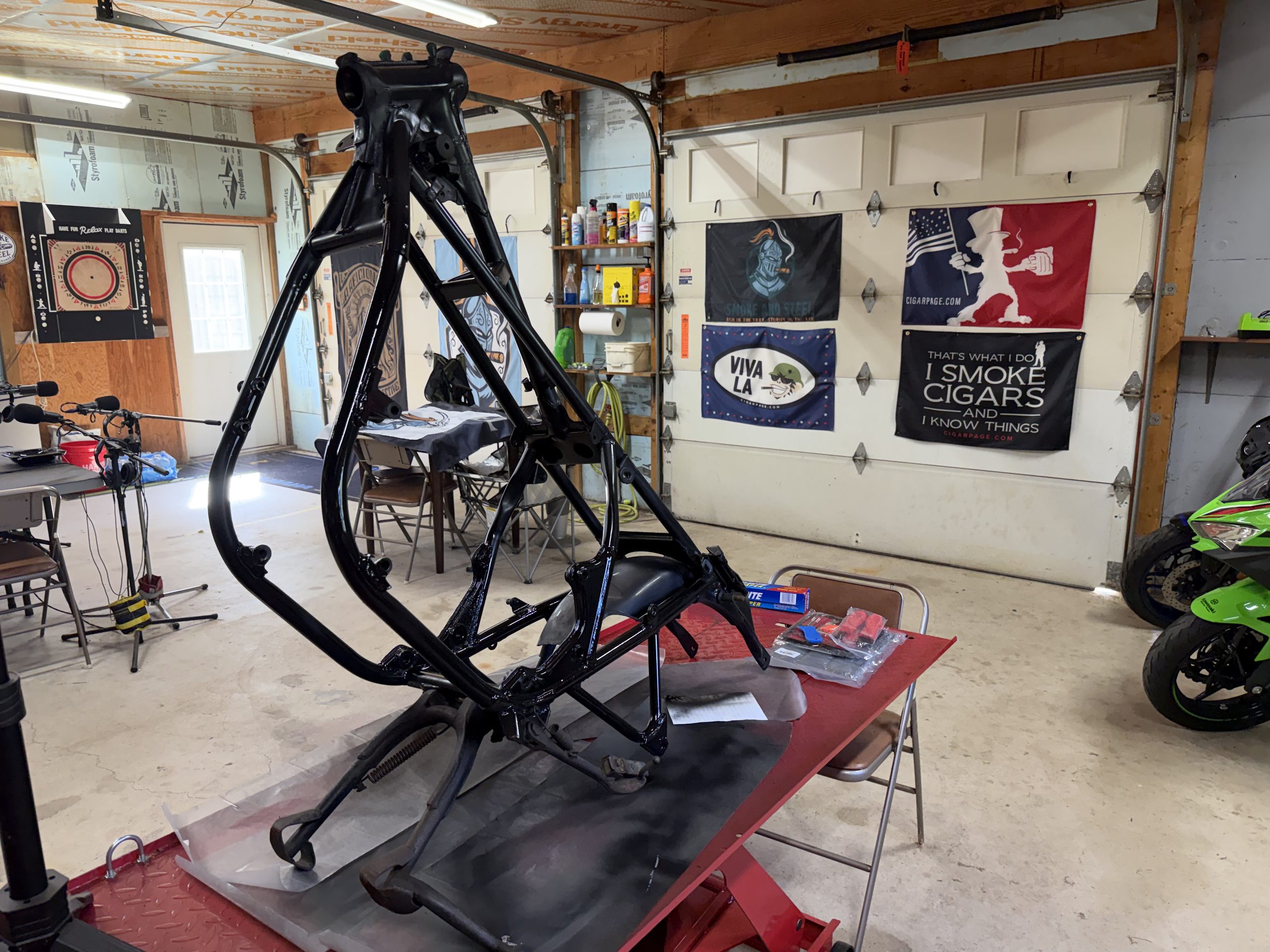
After power washing the bare frame and mapping out the rust, the plan going into this session was straightforward. Hit the rust spots around the welds with a wire wheel, spot prime the bare metal, touch up with satin black, and call it done. The CB750F frame paint job was never supposed to be a full repaint. Then the self-etching primer had other ideas.
A quick note before getting into it: I had a camera problem during this session where the recording was running when I thought it was off and off when I thought it was recording. The video captures the work but not the talking portions I had planned, so I am filling in the context here.
Table of Contents
Starting With the Wire Wheel
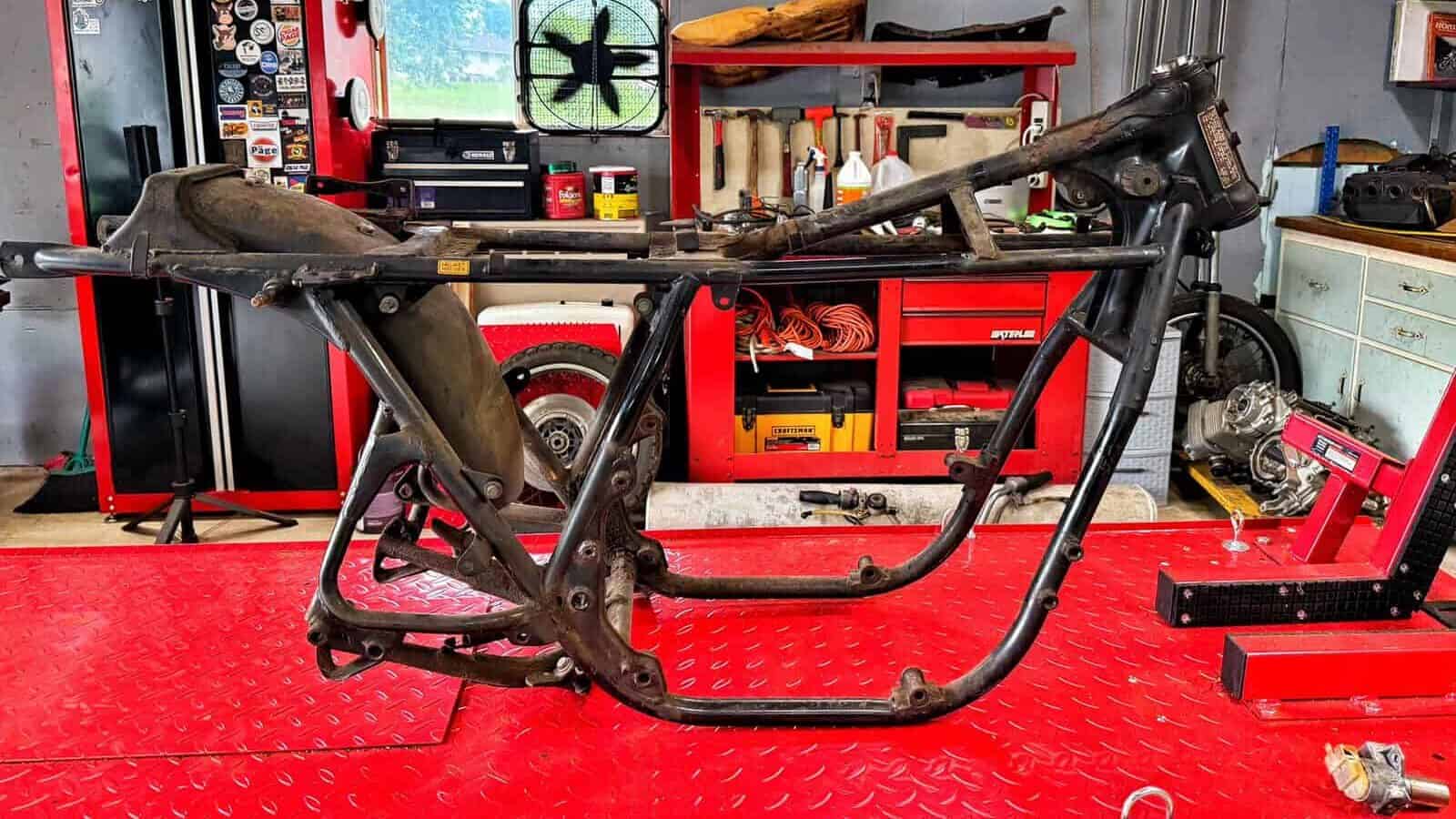
The rust on this frame is not catastrophic. It collects around the welds, which is where you typically find it on an old bike that has been stored rather than actively ridden through harsh conditions. There are also some nicks and chips in the paint from years of engine work and the engine pull that happened somewhere in this bike’s history.
The approach was to go around the frame with a wire wheel in the rotary tool and clean up any loose rust, knock back the heavier spots around the welds, and scuff the chipped areas enough to give primer something to bite into. The rain kept me inside for this session when I had been hoping for outdoor light to work by, so I was doing my best under the garage lighting and working in sections. The plan was to do the top of the frame, prime it, let it dry, then roll it onto its side for the next section and work around the frame that way over a couple of days.
The Primer Decision
Here is where the session took a turn. Some of the rust around the welds was heavier than the lighter surface stuff I had expected, and my first instinct was to reach for the rust reformer. The problem with that approach on a frame with existing black paint is that rust reformer dries black. Once you spray it, you have three different shades of black to deal with: the original frame paint, the rust reformer, and the satin black touch-up coat that goes over everything. Trying to figure out which areas had already been addressed and which still needed paint was going to be a guessing game.
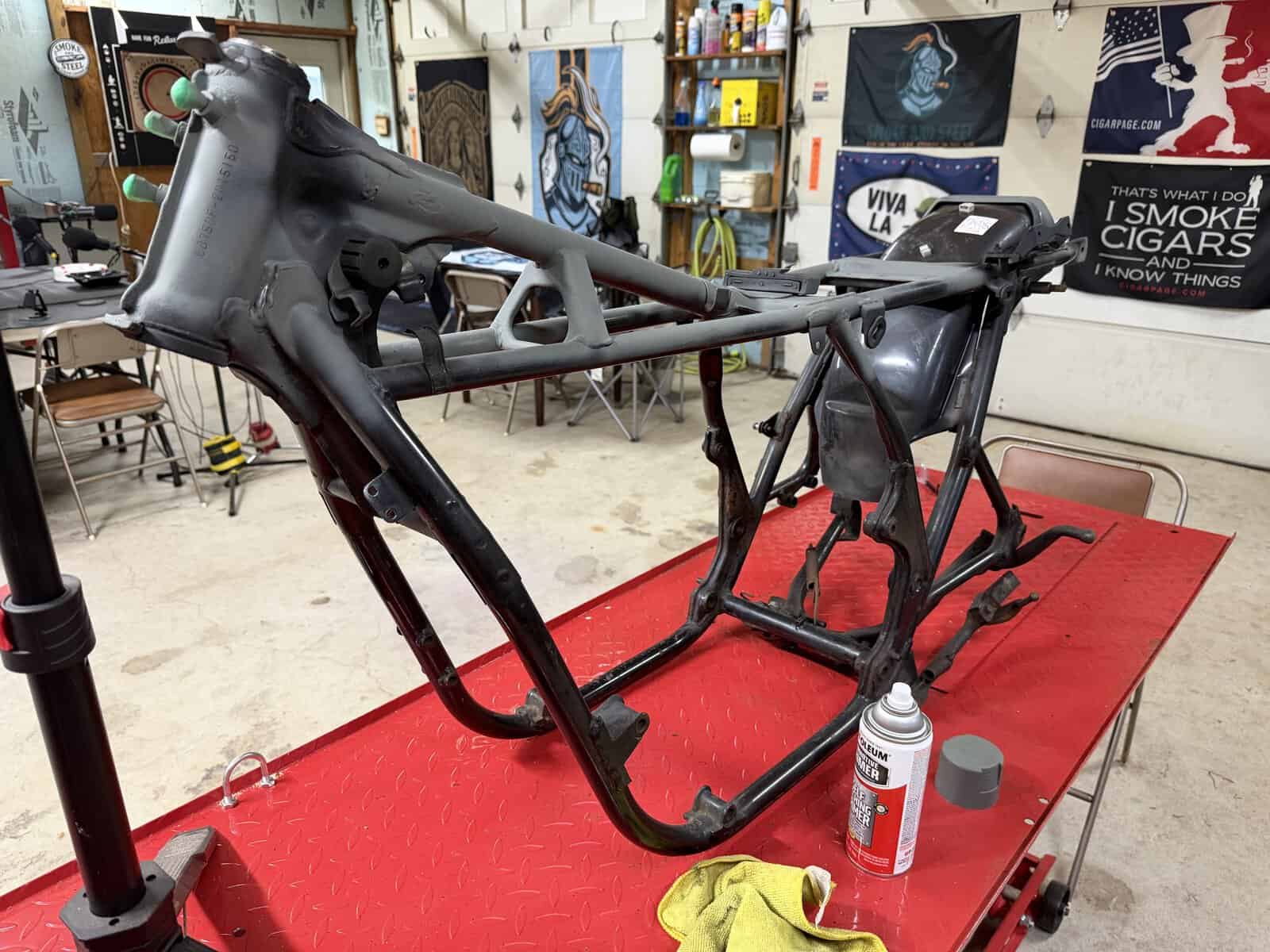
Self-etching primer solved that problem immediately. It dries gray, which makes every spot that needs a coat of satin black completely obvious. It is a simple way to keep track of where you are on a complex surface with rust in multiple places at various stages.
How Spot Repair Became a Near Full Repaint
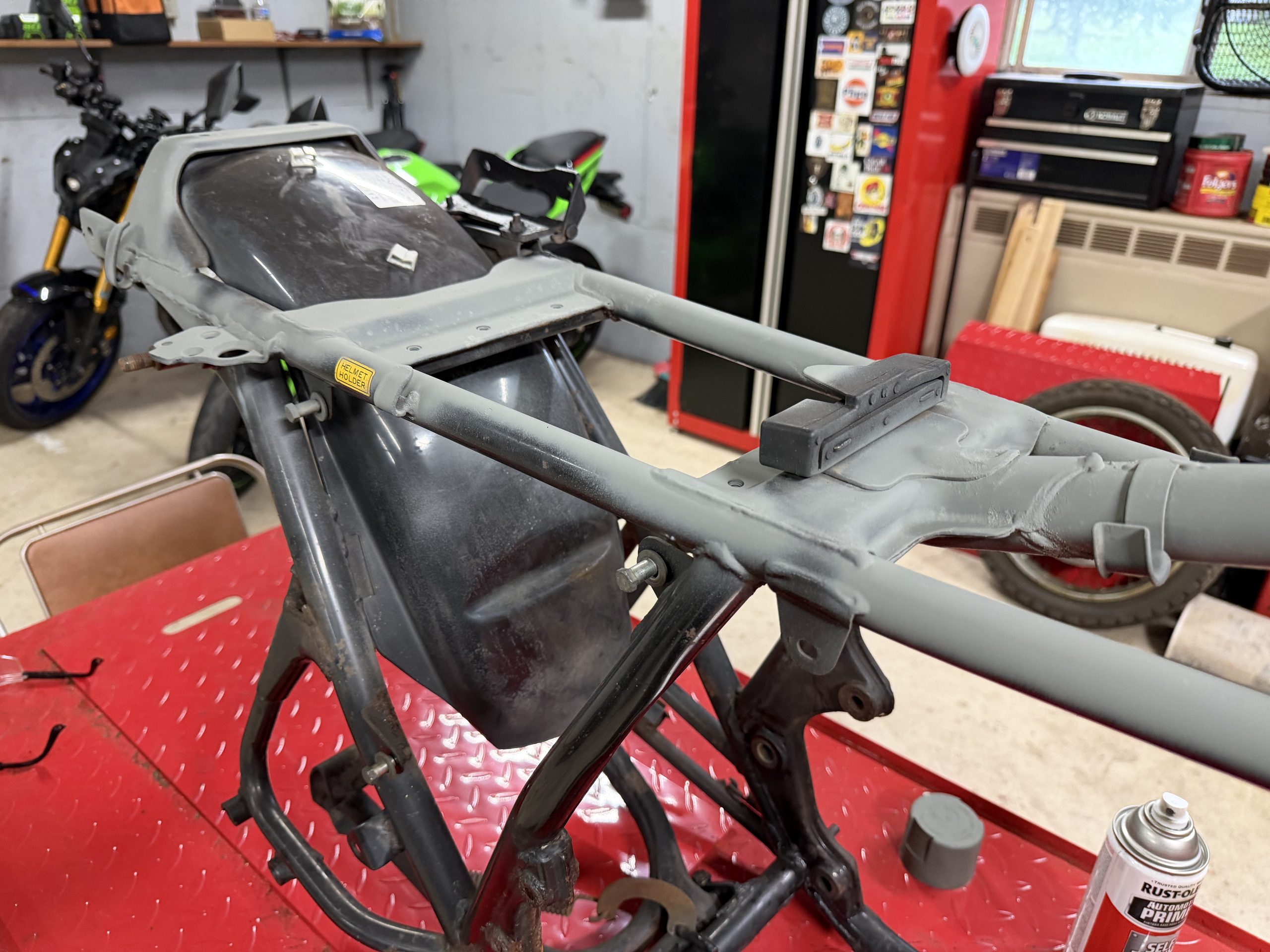
This is the part that will be familiar to anyone who has done this kind of work before. An aerosol can does not lay down a precise little dot of primer. You get roughly a two inch diameter circle minimum, even when you are trying to be controlled about it. A small rust spot here, a chip there, a longer strip of bare metal along a tube, and suddenly you have gray patches scattered across most of the frame surface.
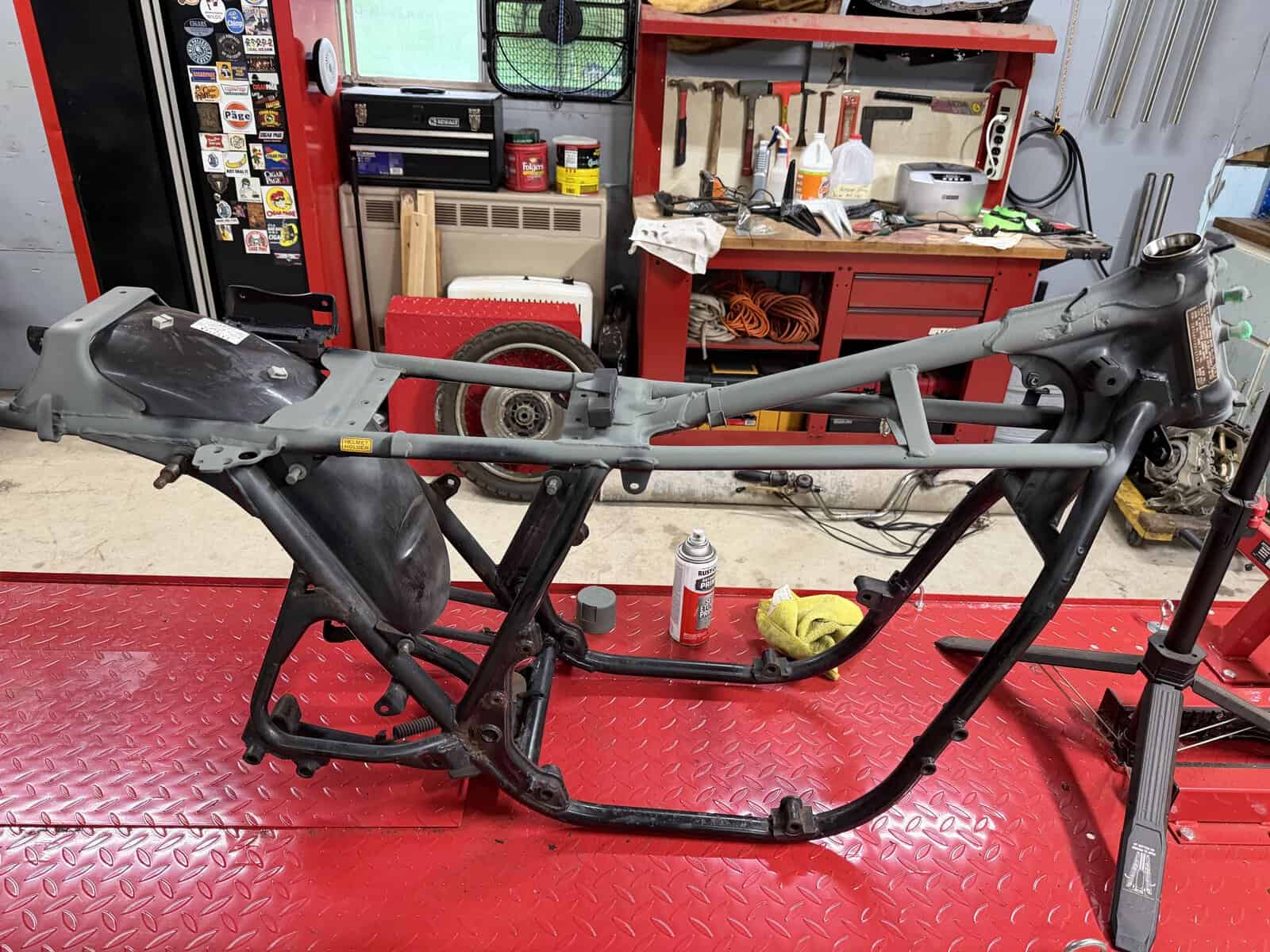
At a certain point I stepped back and looked at what I had and made the call that just repainting most of it was cleaner than trying to blend touch-up satin black into the existing paint around a dozen gray primer islands. So that is what happened. What started as spot repair turned into repainting a significant portion of the frame. It is not a show quality paint job and it was never going to be, but it is clean, consistent, and rust is not going to be eating through those spots anytime soon.
The one thing I kept in mind throughout is that this frame is going to have most of its surface covered by components once reassembly begins. The areas that will actually be visible when this bike is complete are limited. So chasing perfection on a surface that will mostly be hidden under the engine, the battery box, and the wiring made no sense.

Where the CB750F Frame Stands Now
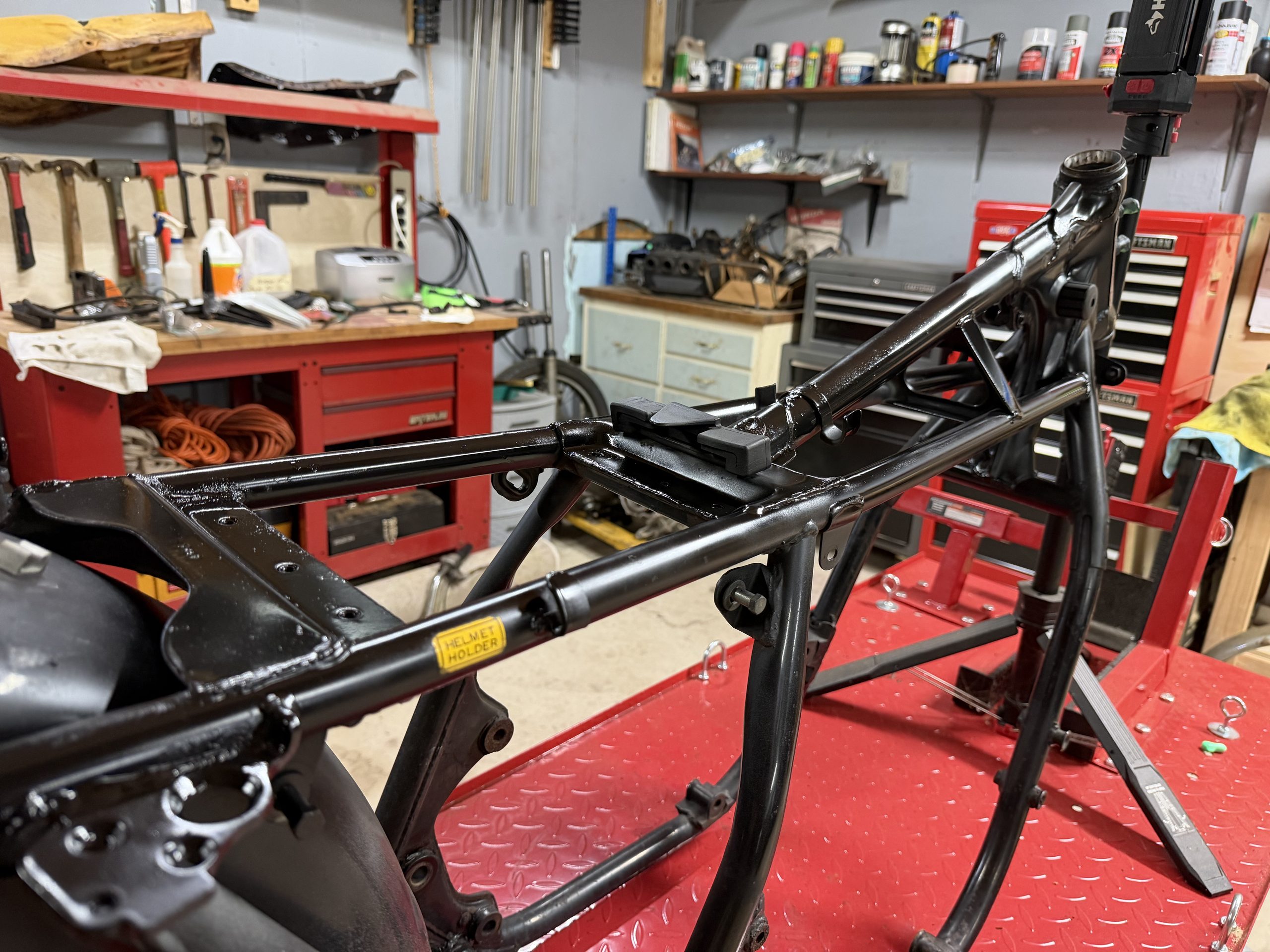
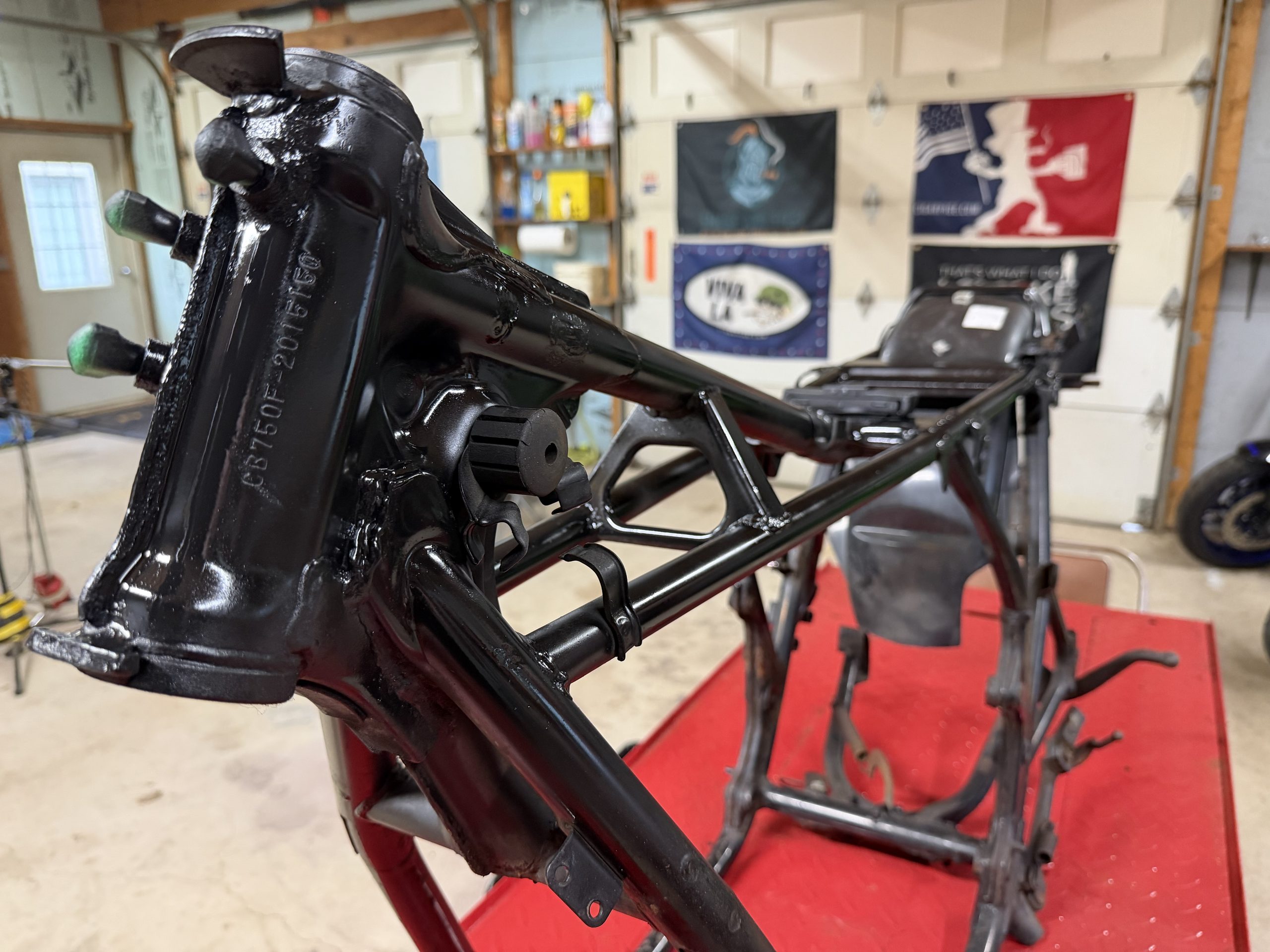
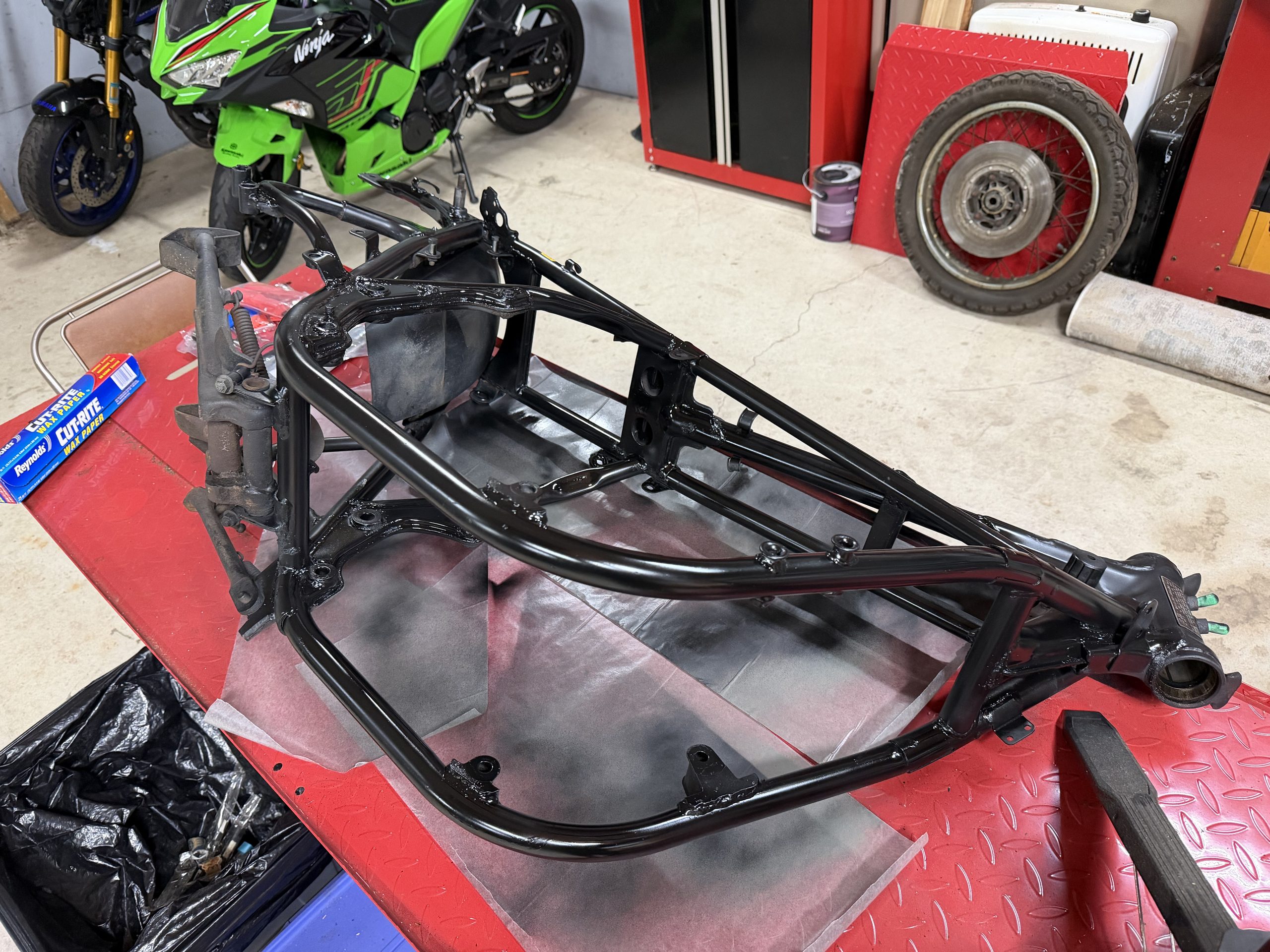
The frame has been wire wheeled, primed, and painted in the areas that needed it. It is not a frame-off restoration quality finish, but it is solid and it is done. Once the paint cures fully I can start thinking about what goes back on and in what order.
The wiring loom cleanup is still waiting in the queue. The front end work, forks, wheel, master cylinder, and front caliper, is the next major phase. The gas tank is still at Jeff’s. The seat pan situation is still unresolved. But the frame itself is no longer a concern, and that feels like a genuine milestone after starting from a corroded project bike that had been sitting in a shed for two decades.
Ride With Me
If you want to follow along as the front end work starts and this restoration moves toward reassembly, subscribe to the WaltInPA YouTube channel so you catch every session as it goes up. If you know someone who has made the same call on a vintage bike frame, spot repair turning into something bigger once the primer goes on, send this one their way. And if you want to be part of the conversation as the CB750F Restoration keeps moving forward, come hang out in the WaltInPA Discord where good people talk through exactly this kind of thing.
Recent Posts
This episode of Kickstand Conversations started because of one bike. I came across the new Honda CB1000F a few weeks back and I have not stopped thinking about it. That led me, Trekkie, Goofy, and...
If you've been following along, you may have already heard the news. I've got a motorcycle restoration project coming up and I am genuinely pumped about it. If this is the first you're hearing it,...