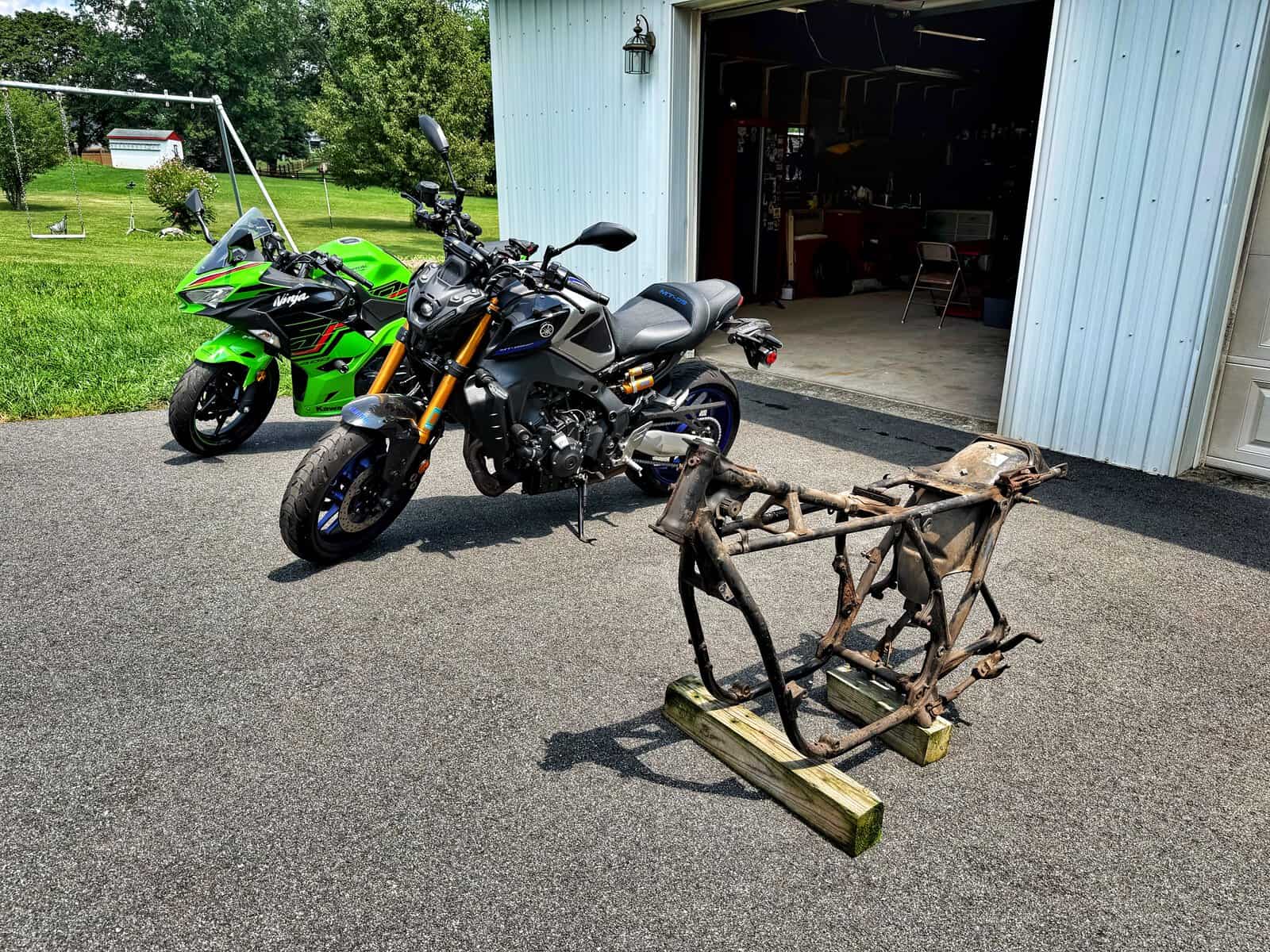
After pulling the entire front end off last session and ending up with a bare frame on the lift, the next logical step was getting that frame clean enough to actually assess. The CB750F frame power wash happened on a hot day when I had already dragged the power washer out to wash my other two bikes, and carrying the frame outside to hit it properly turned out to be exactly the right call.
This was more of a planning and assessment session than a wrenching one. The frame is cleaner, the rust is mapped, the paint color question is getting an answer, and the wiring loom cleaning method is locked in. A lot of slow movement across a wide front.
Table of Contents
Why the Power Washer Made Sense
The area around the kickstand was the main reason I did not want to try cleaning this frame on the lift. Decades of chain oil had been flung into that section of the frame and just baked in there, the same kind of grime that made the CB750F chain guard cleaning such a miserable job. Trying to get a wire brush into those tight spots with the frame sitting on the lift would have taken a long time and probably still left a lot behind.
Instead I carried the frame outside, soaked it with degreaser, let it sit, and power washed it. The bulk of the grime came off without much effort. There is still some residue on the plastic sections that will need a closer scrub with cleaner, but the metal frame itself is in a much better position to work on now. This is one of the real advantages of having a completely bare frame rather than trying to clean around everything still attached.
What the CB750F Frame Rust Actually Looks Like
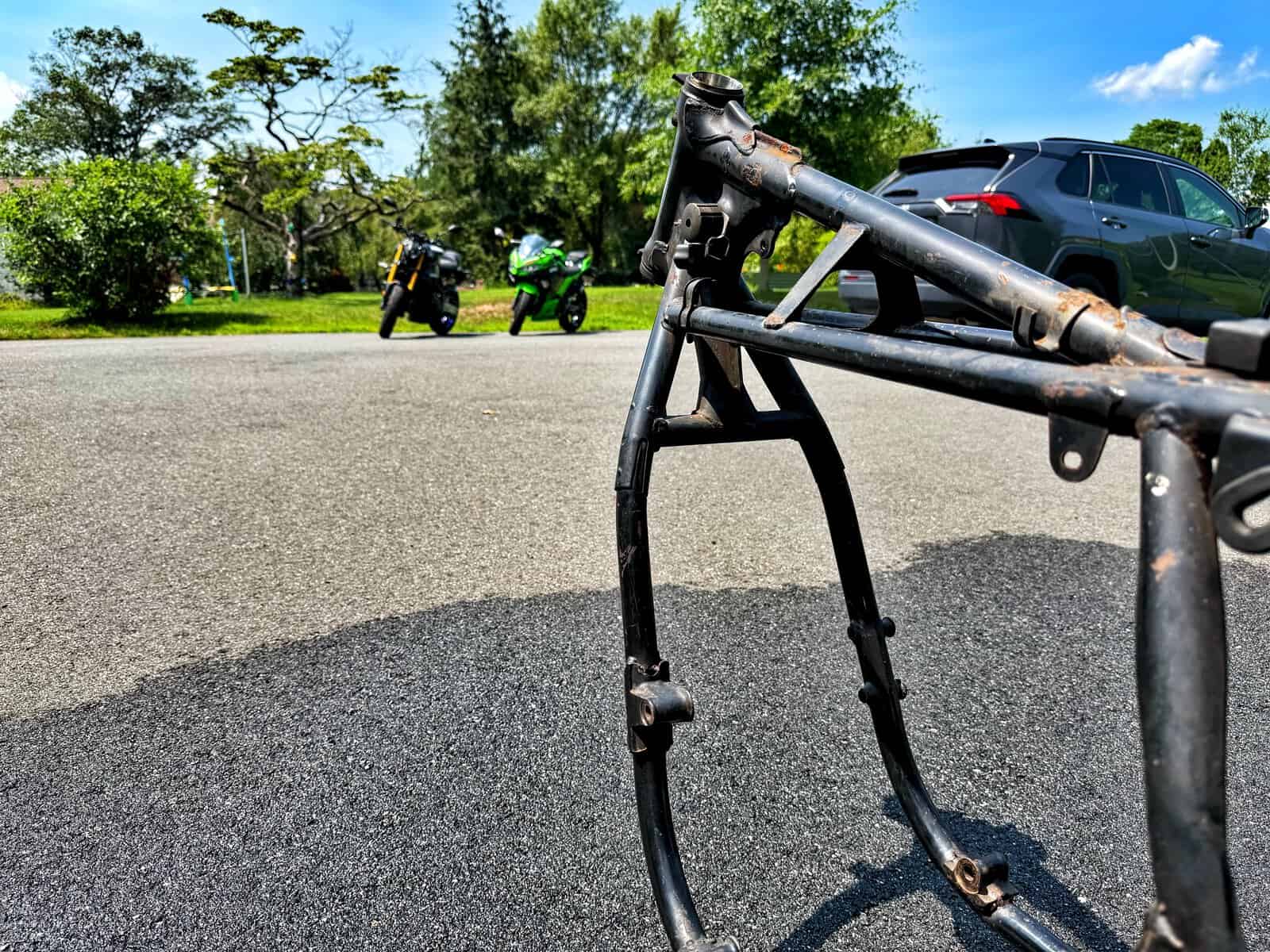
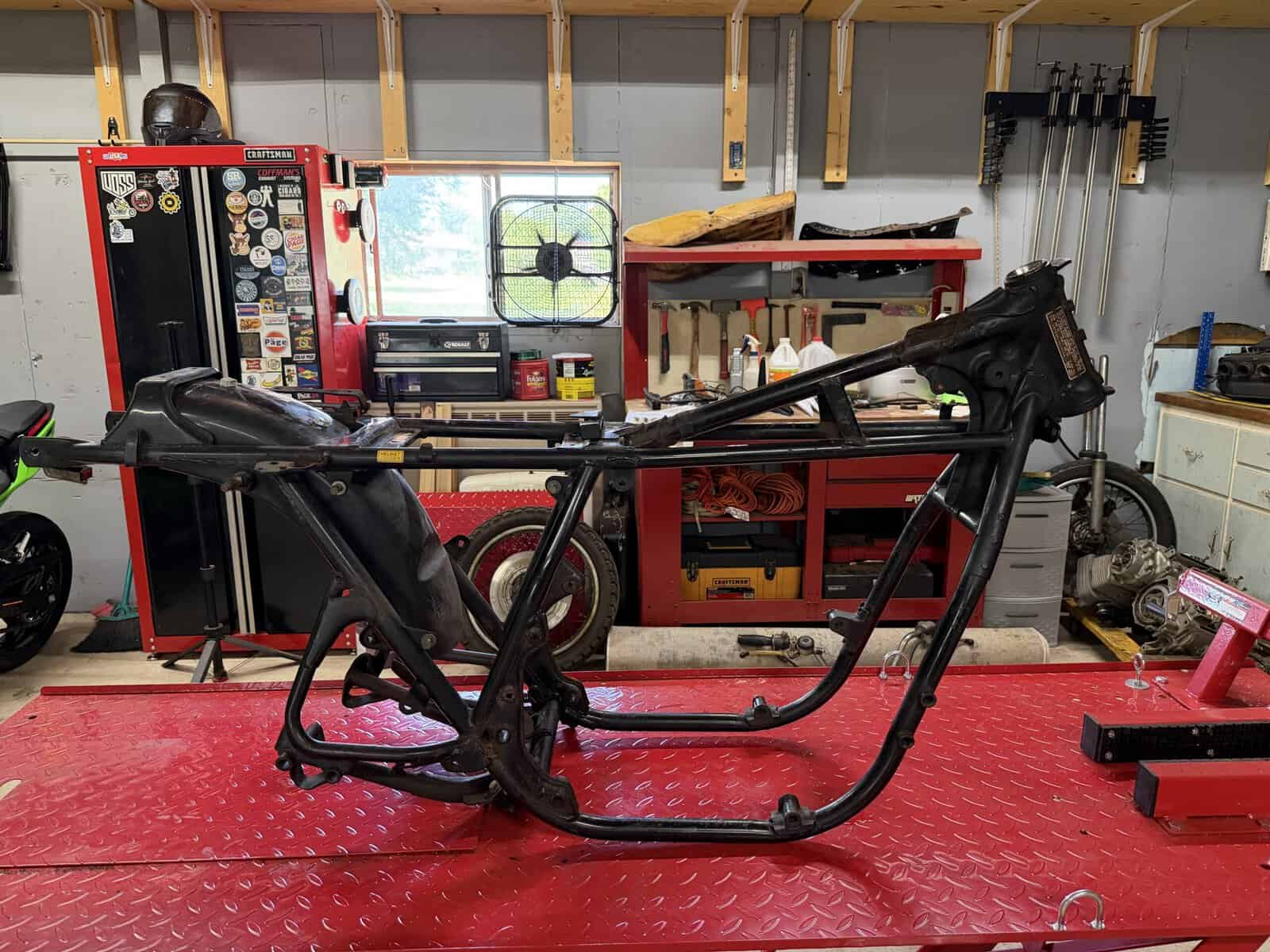
The frame is not in bad shape overall. The rust concentrates around the welds, which is typical for an old bike that has been sitting rather than being actively eaten by road exposure. There are spots around the neck, a few areas lower on the frame, and some nicks from where the engine was pulled out at some point.
A few people suggested blasting the frame and powder coating it, which would be the proper full restoration approach. But this bike has never been headed toward a show. It is going to be a rider with patina and character, and spending serious money on a full blast and powder coat does not match that goal. The plan is spot treatment instead. Wire wheel the rust back to clean metal, hit the bare spots with self-etching primer, and finish with satin black rattle can to match the existing paint.
The original paint color is visible under where the battery box rubber mounts sat, protected from the elements all these years. It has a slight sheen that reads close to satin, which gives me confidence the touch-up paint will blend reasonably well rather than looking like obvious patches.
The Paint Color Question
The sulfur yellow on this bike is a candy color, which means it needs a silver base coat before the color goes on top. That rules out a simple rattle can color match for any repainted sections. The burnt paint from welding work means the tank needs to be repainted regardless of anything else, so this decision has to get made.
Looking at the seat cowl, which spent decades protected under the seat and shows what the original paint looked like before age got to it, I actually like the yellow. I want to keep it rather than go a different direction. The seat trim has a yellow accent stripe that is a sticker rather than paint, and if I can find a reasonably close match for the repainted tank and cowl, I do not think that trim piece will need anything beyond cleaning and straightening.
The complication is the candy color process and the decal cost. Replacement tank decals run close to two hundred dollars for the set, and I am still not sure I want to spend that. I know someone with an auto body shop who might be able to help with the actual spraying. That conversation still needs to happen.
The Wiring Loom Cleaning Plan
The wire loom is out and sitting on the bench. Some of it looks workable in good light but other sections are so dirty the wire colors are nearly unreadable, which is a real problem for getting connections right during reassembly.
The plan is the vinegar and salt method I have been referencing for several episodes now. A heavily saturated vinegar and salt solution to dissolve the corrosion out of the connectors, followed by a baking soda and water rinse to neutralize the acid, then hot water and dish soap to finish. I saw this done on another CB750 builder’s channel and the results were dramatic.
What I am not going to do is pull the loom apart and re-loom the whole harness the way he did. There are too many branches coming off this harness and I do not trust myself to get every wire back where it belongs after pulling it completely apart. I am going to clean it as an intact assembly and deal with any sections that fall apart as they come rather than planning for a full disassembly going in.
What Is Next on the CB750F
Frame rust touchup is the immediate next job, followed by the wiring loom cleaning. Once both of those are done the focus shifts fully to the front end. The forks need cleaning and a pitting depth assessment before I know whether they are going to cause seal problems. The front wheel needs spoke and hub work. The master cylinder is caked and needs attention. And the front caliper is still an unknown, though actual fluid in the brake lines when we disconnected them is encouraging compared to what the rear looked like going in.
Ride With Me
If you want to follow along as the frame rust repair and wiring loom cleanup happen, subscribe to the WaltInPA YouTube channel so you catch every session as it goes up. If you know someone working through a vintage bike restoration and facing the same spot repair versus full blast decision on a frame, send this one their way. And if you want to be part of the conversation as the CB750F Restoration moves toward the front end and eventually reassembly, come hang out in the WaltInPA Discord where good people talk through exactly this kind of thing.
Recent Posts
This is the first episode of Kickstand Conversations, and it kicks off the way most of our conversations actually start, which is us catching up on who rode and who didn't. From there it turns into a...
When you're out on the bike with a riding buddy or two, the roads are the main event. But a close second? The lunch stop. I'm talking a solid place to sit down, eat something good, and just hang out...