Goofy kicked off this episode of Kickstand Conversations after watching a few videos on the topic. Is the cost of motorcycling something most people can handle, or has it drifted out of reach compared to a car? Trekkie, Scott, and I spent the better part of an hour working on the answer, and it depended heavily on who you are and what you’re buying.
Trekkie showed up with a spreadsheet, I showed up with an actual dealer invoice, and Scott called in from work with no camera and plenty of opinions. We covered what a starter bike costs now (the Ninja 400 got a lot of airtime), what it costs to keep one running, how riding stacks up against golf and a car, and whether you ever really outgrow your first bike. This post hits the numbers and the arguments. The video has the jokes, and there are plenty.
If you’d rather hear the whole conversation, tangents included, the full episode is right above this line.
Table of Contents
What Does a Starter Bike Cost Now?
Goofy’s opening point was that you can still get in cheap. Scroll Facebook Marketplace and you’ll find bikes for a thousand bucks or less. They won’t be the best bikes out there, but they’re something to start with.
We all had cheap beginnings. My first bike was an early ’80s Suzuki GS450L, about $650 from a guy who lived a mile away, found in the newspaper classifieds. Goofy’s first was a GS550L in 1989 for $500, and the only thing wrong with it was dirty carbs. (Two Suzuki GS bikes, same price range, no planning involved.)
Then Trekkie told us what he found when he asked the AIs of the world what a typical beginner buys. The most popular first bike is a Kawasaki Ninja 400 around three years old, and that runs about $5,000. He wasn’t surprised by the bike. He was surprised by the price. Around 2020 and 2021 he remembers those bikes at $3,500 to $4,000, and by his math his own 1990 bike, bought in 1995, would cost about $2,000 today.
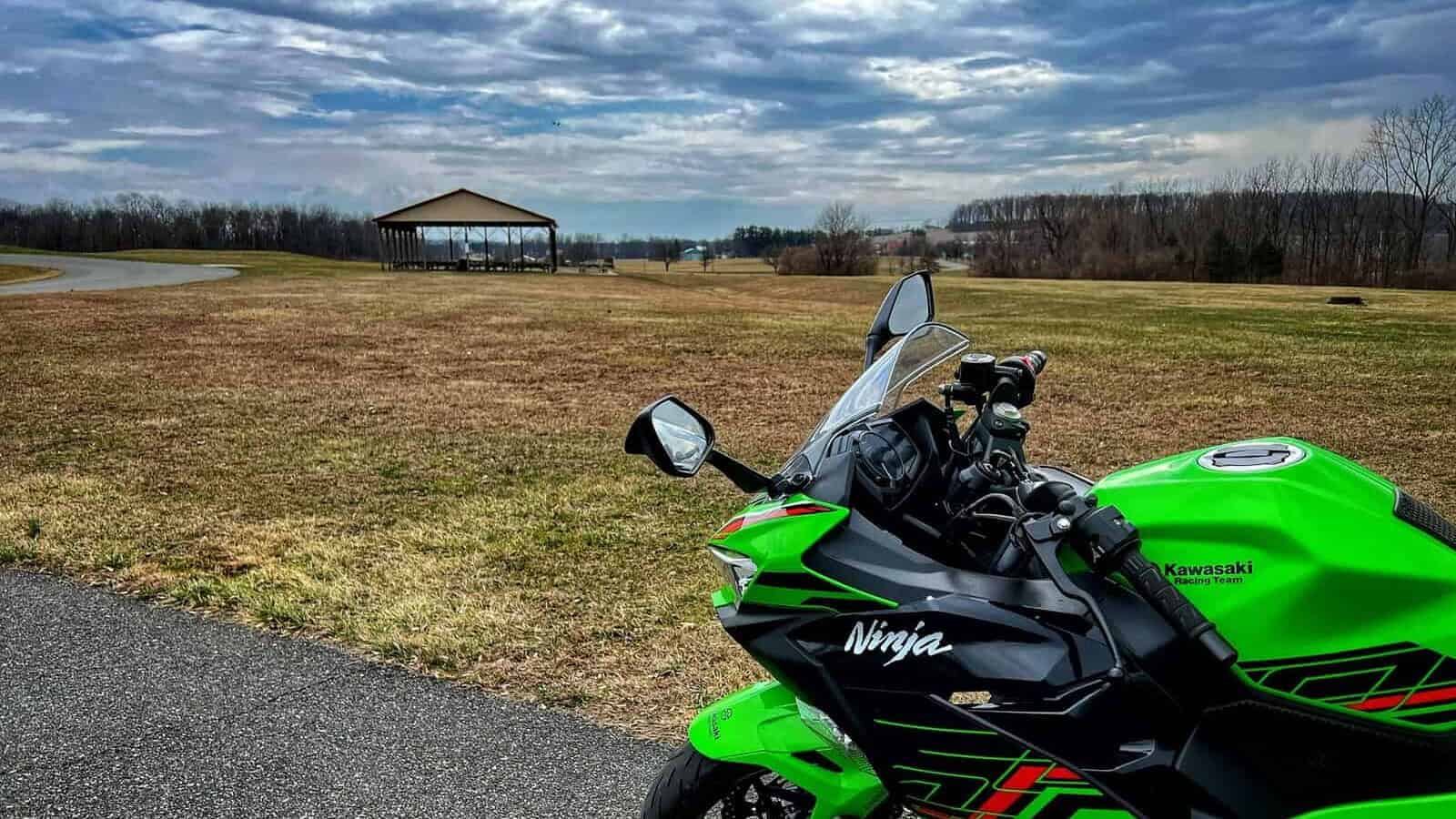
That number got my attention, because my 2023 Ninja 400 KRT edition was about $5,400 new, and close to $6,000 out the door after tax, title, and fees. A three-year-old used bike at $5,000 is not far off a new one with a warranty. The pandemic did crazy things to used prices, and I still think they’re too high. Scott had a Ninja 250 about 13 years ago and said these bikes hold their value if you take care of them. He was looking at AutoTrader during the show and everything was sitting around five grand.
Insurance depends on how you pay. Goofy pointed out that paying cash means liability only, while financing usually means full coverage. Trekkie’s numbers for a 20-year-old on a three-year-old Ninja 400 were about $100 a year for liability and roughly $800 a year if the bike is financed.
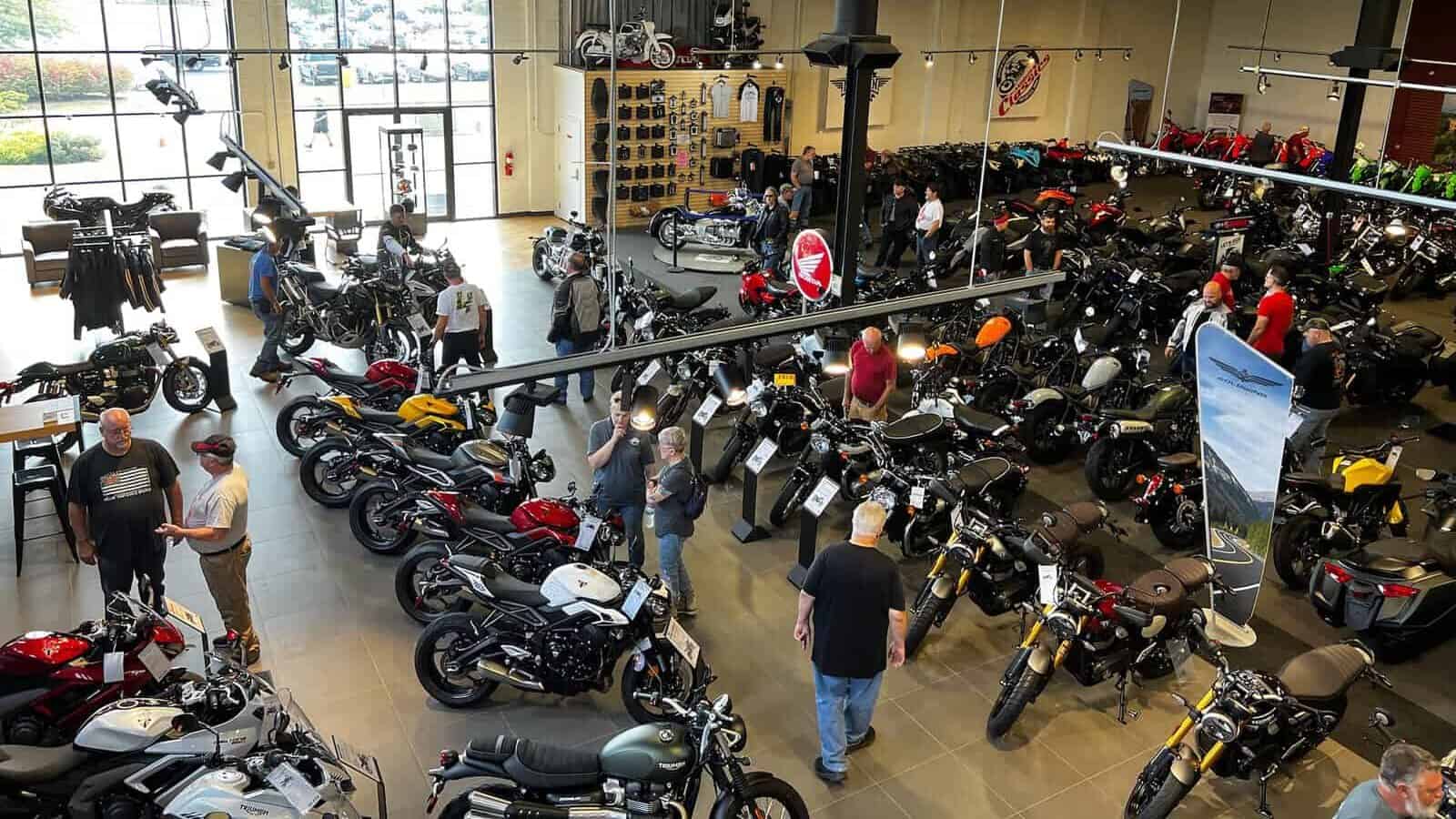
Trekkie’s Budget for a First-Year Rider
Trekkie built his budget around a 20-year-old novice who buys a used Ninja 400 outright. He used a $5,000 bike, about $150 a year for dealer servicing, and a $250 set of tires every 10,000 miles (about $125 a year). He added $100 for liability insurance and around $330 for gas, based on the 4,000 miles a year Google says a first-year rider typically puts on. For gear, he priced a budget helmet at $180, gloves at $50, boots at $100, and a jacket at $150.
That adds up to $6,185 for year one and just $430 for year two. Goofy’s take was that Pennsylvania doesn’t require much gear. Trekkie said he wasn’t going to promote riding without some basic protection on this podcast.
Goofy and I poked at the second-year number right away. There’s no maintenance in it, and at 4,000 miles you’ll probably need tires by the end of year two. Scott added valve adjustments, which he’d hand to a dealer on a Ninja 250, 300, 400, or 500, and Trekkie hadn’t factored them in. After some back and forth we landed at roughly $1,000 a year after the bike is paid for.
Goofy and I also thought 4,000 miles was high. Goofy doesn’t ride that much, and he said so with feeling. My theory is that a brand-new rider is excited and rides more, and then the excuses (too hot, too cold, chance of rain) start to sound reasonable. Scott put 12,000 miles on in his first year, so it clearly depends on the person.
What a Dealer Service Really Costs
I had my invoice hanging behind me, so I read it. My MT-09 went in for a state inspection and a Zip Tune and the total was $324.05. The inspection was $38.47. The rest was four quarts of oil at about eight bucks a quart, a $17 filter, a $4 gasket, and the labor. As far as I can tell the Zip Tune is an oil change, a round of checks, and chain cleaning and adjusting. If you want a dealer to handle everything, figure about $350 for an inspection and basic service.
Honestly, I’m not sure it’s worth it, especially since the advertised Zip Tune price doesn’t include the oil. Goofy said a 5K service on his Harley ran about $350. Scott once paid $210 for an oil change on his wife’s Vespa and swore off dealer oil changes forever. Goofy figures doing it yourself costs $50 to $60 in oil and a filter, and a dealer will charge double or triple that.
Tires follow the same rule. If a dealer handles it start to finish, it can run $150 to $200 per axle, and it gets worse with better tires. Goofy mentioned cheap sets of Shinkos to keep the bill down, and changing them yourself helps too.
Do You Really Need $6,000 to Start Riding?
This is where I stepped in. If I were 20 and listening to four guys on the internet tell me I needed six grand to get into this hobby, I’d be discouraged. A lot of young riders just want a beater. A Marketplace bike at $1,200 to $1,800, plus a couple hundred dollars to make it roadworthy, might break down every three or four weekends, but it gets you in the door. Trekkie agreed that you could probably do it for half the $6,000 and still have a decent first year.
Goofy pulled up Marketplace live and found a 2003 GSX-R 600 for $2,000 with 23,000 miles. I figured it had damage on one side, and Trekkie warned that a 600 sportbike will cost more to insure. Goofy also mentioned you can order a bike off Amazon for around $1,200. Scott owns one of those Grom clones (bought secondhand, not from Amazon) and said it took a lot of work to get it running right. Titling and registration never came up in Trekkie’s budget. Goofy said Pennsylvania charges sales tax on the purchase price when the title transfers, so that’s something to check before you buy.
If you don’t want a sportbike, Goofy and I both thought you could swap the Ninja 400 for something comparable. The Z400 is a little more comfortable, a Honda Shadow works for cruiser people, and the Rebel 500 came up as well. Trekkie said the Rebels are a distant second to the Ninja 400 in popularity. Trekkie also floated the cheapest route he could think of, a new Honda Navi for around $2,500, which is cheap to insure and gets roughly twice the mileage of a Ninja. Of course, he joked, you wouldn’t want it near tractor trailers on the highway.
Goofy’s argument was that anything can be a beginner bike. You can find a mid-2000s Sportster on Marketplace for under five grand. Trekkie wasn’t convinced, but Goofy shrugged and said that’s what some people want. Trekkie’s bottom line was that you might get started for under $3,000 and then spend $400 to $500 a year, as long as you don’t need a major service.
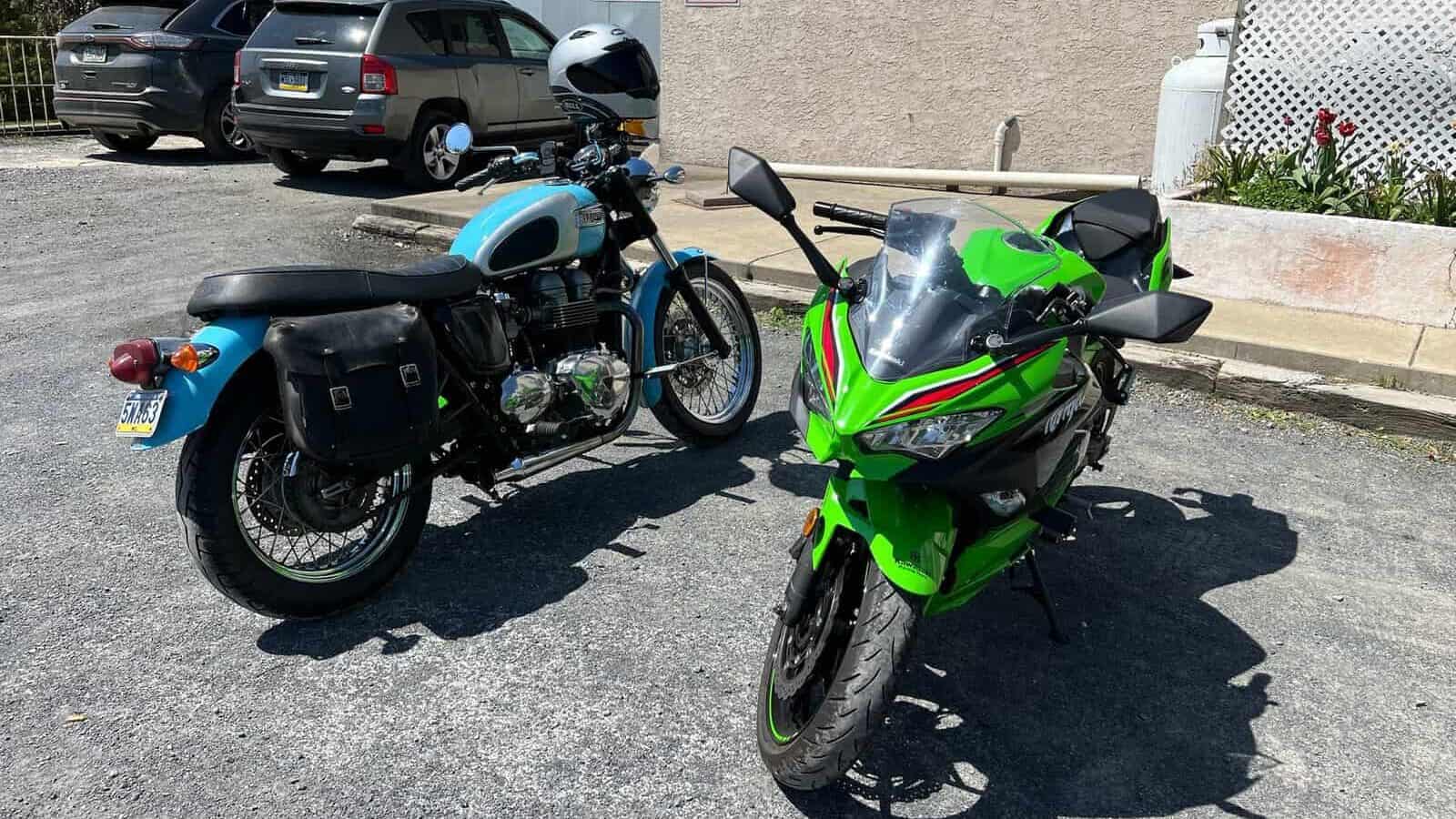
What a Veteran Rider Spends
Trekkie then flipped the budget to a veteran buying a premium bike. He used about $14,000, which he sees as the sweet spot for the adventure bikes and retro bikes people are buying right now. Financed over five years, that’s $3,600 to $4,000 a year on the loan alone.
Add servicing north of $500 (maybe closer to $800), $200 to $300 for tires, $400 to $500 for full coverage insurance, and about $300 a year in premium gear spread over a few years. Premium gas and a few more miles round it out. His total came to about $5,800 a year if you’re financing and about $2,200 a year if you’re not. Goofy noted you can get a new Harley in that $14,000 to $15,000 range, though not the fancy ones.
Trekkie argued that for a commuter the cost goes down per mile, since you’re spreading it over more miles and skipping gas and bus fare. He thinks it’s a cheap, cost-effective way to have fun and was surprised more people don’t do it. Goofy’s theory is that a lot of people are simply afraid.
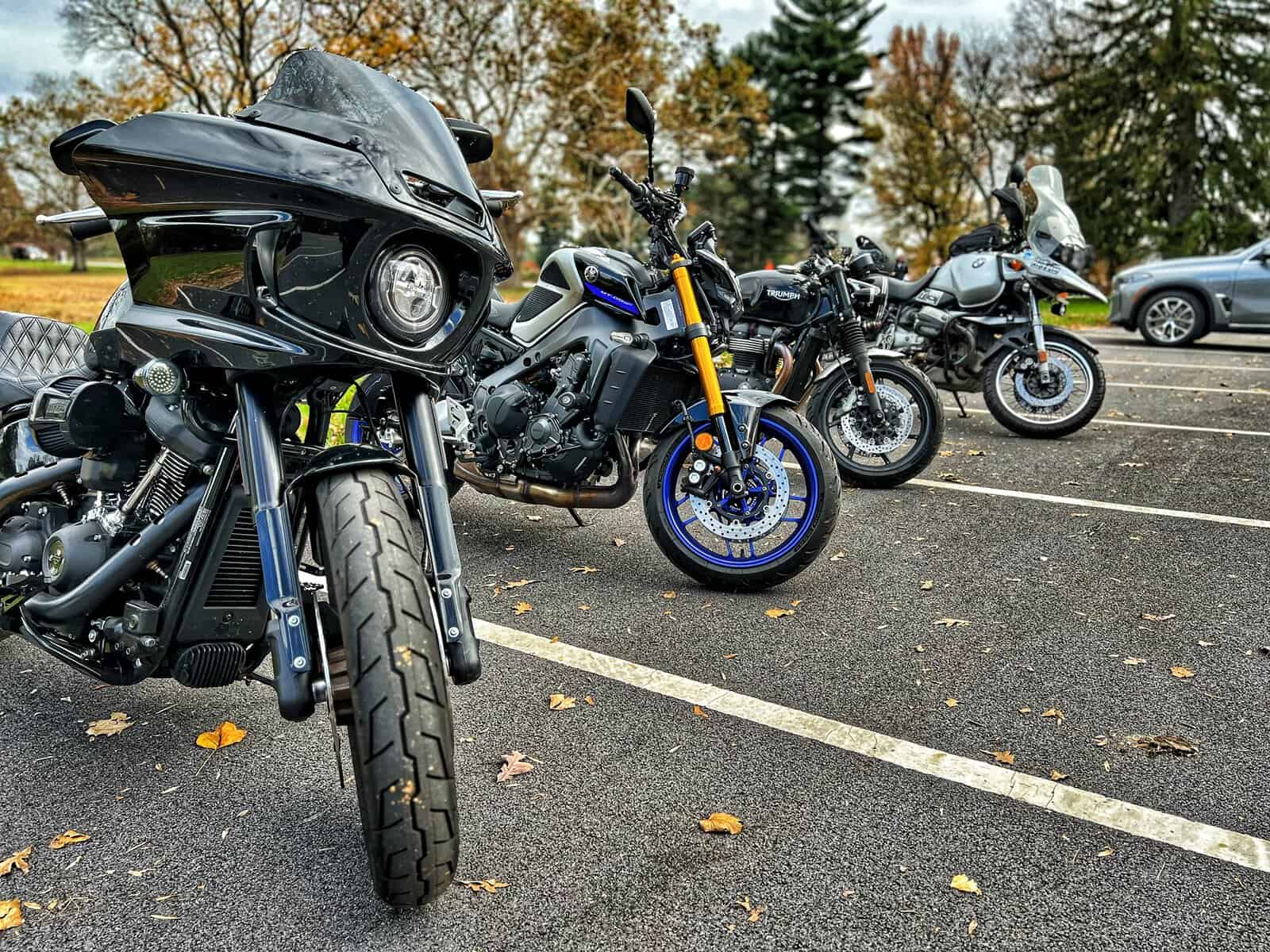
Motorcycling vs. Golf and a Car
Goofy asked how this compares to other hobbies. If you spend about $2,000 a year, ride roughly 10 hours a weekend, and ride 40 weeks (Scott reminded us that we only get three seasons), that’s about $50 a weekend. Golf starts cheaper, since you can buy decent clubs for under $500, but a couple of rounds a weekend ran $100 to $150 in Goofy’s estimate. After the initial outlay, golf is the pricier hobby. (We also tried to price out bowling, which went about as well as you’d imagine. I called it getting into the weeds.)
The car comparison got more interesting. Goofy figured a 20-year-old could grab a beater Honda Civic for $1,500 or so. I had to tell him that cheap cars aren’t cheap anymore. A 2006 Civic with 180,000 miles probably costs $5,000 if the seller knows what they’re doing, and Goofy admitted he hasn’t bought a used car in years.
Personally, the car wins for me. Pennsylvania winters mean the car gets me to work, and the motorcycle is a luxury, even if I make it as cheap a luxury as I can. Goofy countered that some college students only have a bike. I agreed it could make sense in a city where you can hop on a bus when the snow falls.
Will You Outgrow Your First Bike?
This was the part I wish we’d had another hour for. I warned about the leapfrog trap. You buy a bike, decide you’ve outgrown it in year two, trade up, and then a year or two later you need the next size up, and you keep dumping money into the hobby because you feel like you’ve outgrown what you own.
Scott hates the “I outgrew the bike” line. He heard someone say she wanted a CVO because her Road Glide was hard to push up Beartooth Pass, and he pointed out the two bikes were about five horsepower apart. His preferred honesty is “I just wanted a different bike.” He’s seen it go the other direction too, with a friend going from a Goldwing down to a CFMoto 450 so he could actually pick it up. Trekkie added that it’s more fun to ride a slow bike fast than a fast bike slow.
Goofy asked if the Ninja 400 were my only bike, would I outgrow it? Honestly, no. I’m not laying it over in the corners, I’m not asking more of it than it can deliver, and I’m not Rossi putting a knee down. My riding doesn’t involve passing traffic on the highway either, so for my skill set and conditions it’s very capable. I bought the MT-09 because I wanted something bigger and newer, not because I outgrew my Honda CB650F. Your mileage may vary depending on how and where you ride.
Trekkie thinks older riders getting into the sport can skip the 300s, 400s, and 500s and start on a 600 or 700, since they’ll keep it longer and pay less in insurance than a 20-year-old would. Goofy’s rule is to buy the biggest bike you think you can handle (unless you’re his son). A bigger rider is going to feel cramped on a Ninja 400. Everybody agreed, though, that nobody should hand a 20-year-old an R1.
So, What Is the Cost of Motorcycling?
Trekkie brought it back to the original question and said the cost of motorcycling is as much as you can afford. Goofy corrected him: it’s as much as you’re willing to pay. Between my roughly $6,000 Ninja and whatever Goofy paid for his (he wouldn’t say, because someone might watch this), there’s a huge range.
Trekkie’s takeaway was that motorcycling is attainable for almost anybody who wants to do it. Goofy added that they have to actually want it. I think that says it all. Accessories, which Trekkie says can quietly drain your wallet, got bumped to a future episode.
If you don’t own a bike yet and you’re thinking about it, the guys asked you to drop a comment with your situation. Tell us the bike you have in mind and we’ll try to help with gear, maintenance costs, or anything else.
Ride With Me
If you want more riding content, subscribe to the WaltInPA YouTube channel and send this post to a friend who rides (or one who’s thinking about it). Come hang out in the WaltInPA Discord too, where good people talk about riding and Scott says he’d love to answer your questions.
You can also find the rest of the crew on their own channels. Trekkie’s is TrekkieMoto, Goofy runs Goofy Bastard, and Scott has Scott’s Moto Adventures.
Recent Posts
I had one of those random afternoons where you're digging through moving boxes and you find something you completely forgot about. For me it was a little green wirebound booklet I bought about two...
If you've been around the channel for a bit, you know I like to keep things pretty simple when it comes to my motovlog camera setup. One camera, mount it, ride. But I've got a restoration project...