Goofy kicked off this episode of Kickstand Conversations by admitting that for two weeks before he buys any bike, he’s online looking up what he can bolt onto it. That became the topic: modifying, customizing, and accessorizing your motorcycle after you buy it. Trekkie, Scott, and I joined him, and we ended up sorting out which motorcycle mods worth the money paid off and which ones were a waste.
I walked in calling myself a stock guy. Trekkie said he doesn’t modify his bike, he just buys modifications. By the end of the episode, Goofy wouldn’t give a number for what he’d spent, Scott pleaded the fifth, and we all had to admit we’d done more than we thought. Below is the recap, and the video has the full conversation, including the jokes that don’t translate to text.
Table of Contents
If you’d rather hear the whole thing than read the recap, the full episode is above.
Everybody Said They Barely Modify, Then We Counted
Trekkie wanted to separate modifying from accessorizing right away. Goofy wasn’t having it. His view is that unless you’re cutting the frame or reshaping the tank, everything people do these days is bolt-on, so it’s all the same thing. Scott made the case that even ergonomics counts. Bar risers and lower seats are customizing too, since you’re making the bike fit you.
Goofy had pulled up a survey on how many owners modify their bikes, and he didn’t trust the numbers. They seemed low to him, and none of us know a rider who hasn’t touched their bike. Trekkie’s version was that even a phone mount counts.
The phone mount is a good example of how it adds up. By the time I bought my Quad Lock and the wireless charging head, I was over a hundred bucks. Then I got a new phone and had to buy another $45 case. Goofy dodged that by using a second phone as the bike’s iPod, and Scott skipped the whole thing with a CarPlay unit. I said that if I had a bigger bike with a windscreen to tuck a second screen behind, a CarPlay setup would be high on my list. Trekkie pointed out those screens can also run a dash cam.
Where to Start: Comfort and Crash Protection
Asked what you should look at first, my answer was comfort, which usually means a seat. Scott agreed that factory seats are bad no matter who makes the bike. Harley, Kawasaki, BMW, it doesn’t matter.
The Seat Stories
Goofy’s seat story wasn’t about comfort. The stock solo seat on his Harley was so smooth that every time he accelerated he slid toward the back fender, so he swapped it to stay planted. Trekkie had the same problem on his Speed Twin, which accelerates harder than he expected. He bought a greaser seat with a small lip, shipped from Italy, for about $180.
Trekkie’s verdict was that it was maybe 10% more comfortable and 10% less convenient. It lost the stock seat’s leather grab handle, which he uses to move the bike around, and it didn’t work as well with his saddlebags. He went back to stock and decided it wasn’t worth the money. For comparison, Goofy paid about $250 for a Facebook Marketplace seat, and mine was around $260.

Frame Sliders and Dresser Bars
Trekkie’s first thought was safety. He bought the bike expecting to drop it, so he had dresser bars and frame sliders put on, plus wheel bobbins so the bike goes on a paddock stand easily. The bars have been there for both times he’s dropped it, and they’re also a handy spot to mount cameras. His pick for the most useful mod overall was an SAE connector so a battery tender plugs in without any fuss.
I’ve had the dealer install frame sliders on every recent bike the day I pick it up. They aren’t expensive, and it’s a small insurance policy. Trekkie’s line was that we all drop them eventually.
Buying Accessories With the Bike vs. Afterward
Trekkie had his Triumph spec’d with accessories at purchase, and Martin Moto included the installation in the accessory price. He even waited about three weeks for a second batch to arrive so everything was on the bike before he picked it up. The Triumph heated grips (about $150, he thinks) tie into the dash with a toggle. Goofy did something similar with his Vaquero, having an iPod adapter and auxiliary lights installed before delivery, and he got a discount on parts and labor.
My experience was the opposite. I told my salesman I wasn’t haggling on price and asked him to throw frame sliders on, and I got billed for the sliders plus about two hours of labor. Goofy’s advice was to see the invoice first next time.
Goofy’s own approach is to do the work himself. The Harley audio system cost him around $1,150 to $1,200, and he says the dealer quoted four hours of labor, which he figured at another $600 or so. He and a buddy installed it, plus vent lights in the front fairing, in about three hours, with half of that spent rewatching the video to figure out a connector. Trekkie’s stance is that he buys mods and doesn’t crawl under the bike, so his X-pipe and saddlebags are about as far as he goes. He did say the X-pipe dropped the note a bit and gives him more pops on deceleration.
Which Bikes Are Easy to Modify
Goofy loves that for a Harley, anything you can imagine already exists, probably from fifteen or twenty companies. Almost everything he’s added is aftermarket, with the axle covers and the audio system being the Harley-branded exceptions. Trekkie’s theory is that Harley figured out early it was a lifestyle brand and sold accessories like crazy. Scott added that Harley also has performance parts, like Screaming Eagle kits.
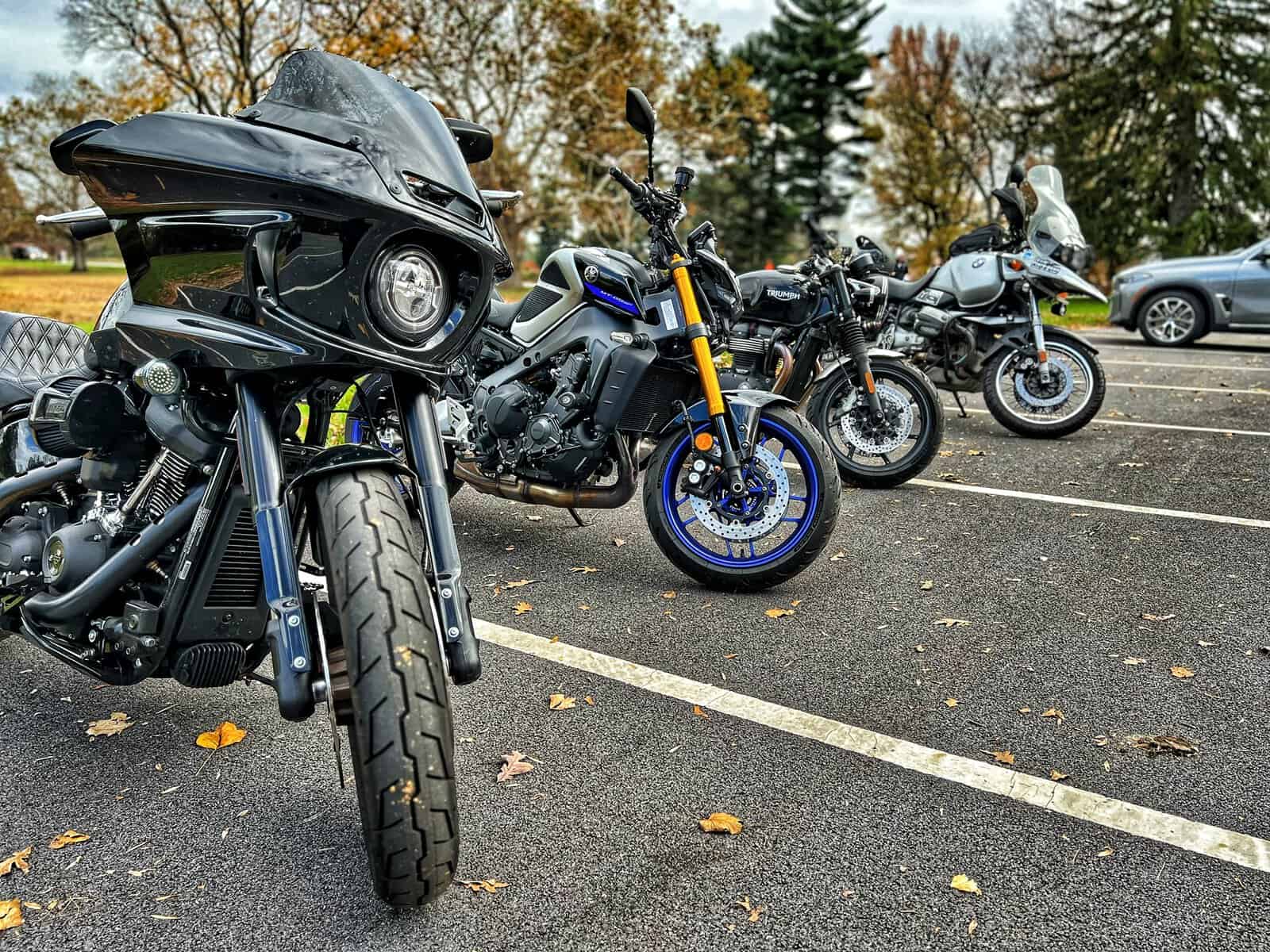
Metric cruisers were the other end of that. Goofy found that the Vaquero had few aftermarket options, and you have to hunt for them. Trekkie said you often end up buying from European companies like SW-Motech, which Scott said is very popular with BMW owners. Scott put adventure bikes, BMWs, and even Vespas on the “lots of accessories” list, and mentioned he’s watched a Goldwing creator, Cruisman’s Garage, who keeps finding little upgrades. Goofy ranked Goldwing close to Indian for options.
Trekkie also made the point that a touring fairing gives you far more places to add things than a naked bike or a Ninja-style sportbike does. His own example was a rack. The factory rear rack for the Speed Twin doesn’t fit his US-spec bike because the tail light setup is different, and he hasn’t found a third-party rack that does, which is partly why he went with SW-Motech saddlebags.
Bike-Adjacent Gear and Tech
Trekkie asked what we’d bought that’s bike-adjacent. My list was long: a lift, tools, a tire inflator, and a lot of odds and ends. Goofy has jacks and had to buy a pile of Torx bits for the Harley. Trekkie’s paddock stand and battery tender are his main two, plus a tool kit made for his bike that has never left its bag, and a chain lock the size of a small excavator tie-down that he’s used once, at Shady Maple.
Some of the more interesting tech came up here:
- Tire pressure sensors. Trekkie’s Triumph has factory ones that only tell him when pressure is low, not the number. Goofy and I both said we’d love that. My MT-09 has hard-to-reach valve stems, and Goofy says the Harley’s straight stems are no better. We wondered why they don’t come with right-angle stems.
- Brake light modulators. Goofy and I both run one. I want one on my Ninja, and I can see a difference in how closely people follow me when the brake light flashes versus staying solid. Goofy thinks a lot of bikes don’t come with enough rear lighting, and that sportbike riders trimming their lights down is a mistake.
- Horns. Trekkie said his stock horn sounds like a wet fart. At Martin Moto’s Street Smart seminar, my buddy Jeff from the Discord and I heard a rider say he puts an aftermarket horn on every bike. Scott said horns are a fine line, because you need to be heard but you don’t want to start a fight.
- A blind spot kit. Trekkie found one for his bike at about $700. Goofy’s alternative was turning your head, which he said just saved Trekkie $700.
Trekkie also doesn’t think much of the cheap dash cams, mainly because there’s no stabilization compared to the cameras we use for the channel.
Motorcycle Mods Worth the Money, and the Ones That Flopped
Here’s how it shook out. The things that seemed worth it were seats (for some of us), frame sliders, crash bars, heated grips, and a decent phone mount. Trekkie’s upgrade from a RAM mount to a Quad Lock was an easy call, since he called the RAM mount awful.
The Flops
Everyone had one:
- I put a windshield on my Honda and pulled it off again before fifty miles.
- Trekkie bought a windshield for his Triumph, never installed it, and it’s sitting in his basement.
- Scott spent $60 on a touch screen off eBay and called it the biggest piece of junk he’s bought.
- Goofy paid $120 for paint-matched handguards that he says block nothing. The $30 Amazon ones on his old Vaquero worked great.
The strap-on seat jokes were the real highlight, and they’re better in the video. The short version is that I didn’t like the strap-on air seat I bought, Scott’s strap-on failed within a year, and his $30 Amazon replacement has been great.
Amazon, When It Works
Goofy’s license plate frame was $30 instead of $80. Scott’s USB port, seat padding, and LED fog lights came from there, and my USB port and camera mounts did too.
What’s Still on the List
I’d like heated grips on the MT-09, since I understand there’s a port behind the headlight that ties into the Yamaha system. Trekkie and Scott both said the grips only heat your palms and the fingertips stay cold. Trekkie said that’s what hand guards are for, and Goofy said that only helps if they actually do something.
Scott has rear shocks to install this winter that will lower the bike and help ergonomics. He also wants a more modern fuse block and to hardwire the CarPlay unit. Trekkie wants an Öhlins-style rear shock for easier preload and rebound adjustments, plus a USB-C port on the bars. Goofy wants better grips and a better headlight for the Harley.
The Money You Don’t Get Back
Trekkie’s takeaway was that we’ve all spent a lot, and it ties back to an earlier episode on the cost of motorcycling in general (it’s in the back catalog on the Kickstand Conversations Podcast page). These are hidden costs that add value to you but maybe not to the bike.
Goofy’s take was blunter. He says you can put thousands of dollars of aftermarket parts on a bike and get nothing for them at trade-in, since the dealer will offer the same price either way. His advice was to take the parts off, put the stock ones back, and sell the aftermarket stuff on eBay or Facebook Marketplace. Trekkie figured the stock heated grips might add a little value and not much else.
Insurance came up too. Nobody had thought much about listing accessories. Trekkie mentioned his dresser bars and frame sliders to his insurer, hoping they’d lower repair costs. Goofy told his agent he’d spent a lot on accessories and the agent said “all right, cool.” If you’re trying to figure out which motorcycle mods worth the money for you, that trade-in reality is worth keeping in mind.
Ride With Me
If you want more riding content, subscribe to the WaltInPA YouTube channel. Share this post with a friend who rides, especially the one who swears he never modified anything. Come hang out in the WaltInPA Discord, where good people talk about riding.
Check out my co-hosts, too. Trekkie’s channel is TrekkieMoto, Goofy runs Goofy Bastard, and Scott is on Scott’s Moto Adventures.
Recent Posts
My MT-09 might be cursed. I know how that sounds, and trust me, I grew up thinking motorcycle superstitions and all the other stuff my mom and grandmother swore by were complete nonsense. Bread...
People ask me all the time how it feels to go back and forth between my Kawasaki Ninja 400 and my Yamaha MT-09 SP. Owning two motorcycles that are genuinely different from each other is a pretty...