
The workbench is finally built, the seat cover is finally off, and the 1976 Honda CB750F seat pan rust situation is officially worse than I was hoping for. My dad got the stuck fasteners sorted with a grinder while I was building the bench, which saved me a lot of fighting with an oscillating tool, and once the cover came away the full picture was not pretty.
This was more of an assessment session than a repair session. There is no conclusion here yet because I have taken this as far as I can without a welder, and whether I am about to become a flux core welder owner is still an open question.
Table of Contents
The New Workbench Setup
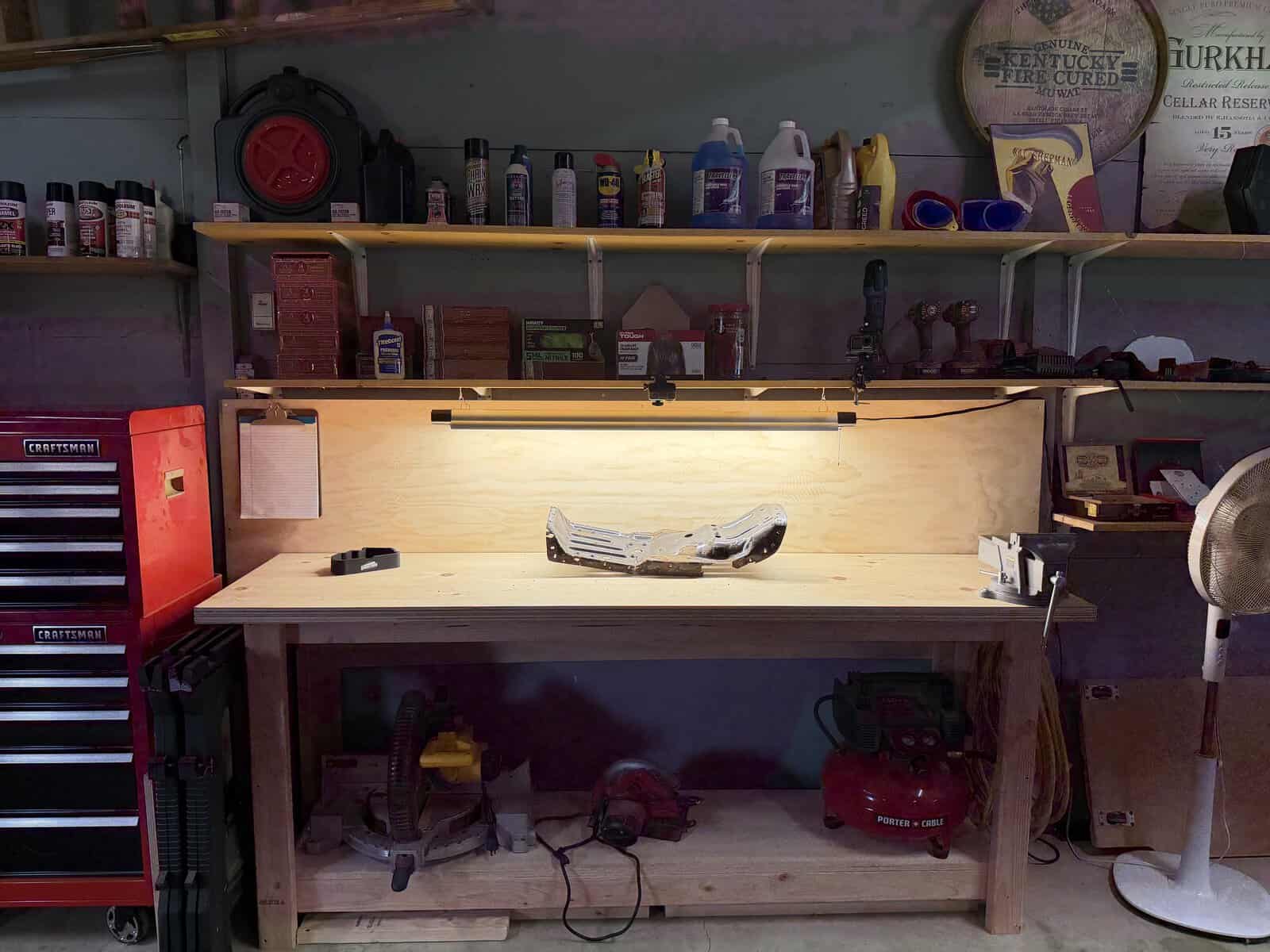
Before getting into the seat pan, a quick note on the shop itself. The garage reorganization project that has been sitting on the open thread list since the CB750F oil tank removal is finally done. I spent most of last weekend building the workbench, reorganizing the space, and setting up a camera position that actually lets you see what I am working on instead of watching me move around just out of frame. Hopefully that pays off going forward.
The bench itself came together with the plywood top my dad had brought over and some 2×4 framing. It gives me real surface space, a place to mount a vise, and enough room for benchtop tools if I add them down the line.
Getting the Seat Cover Off
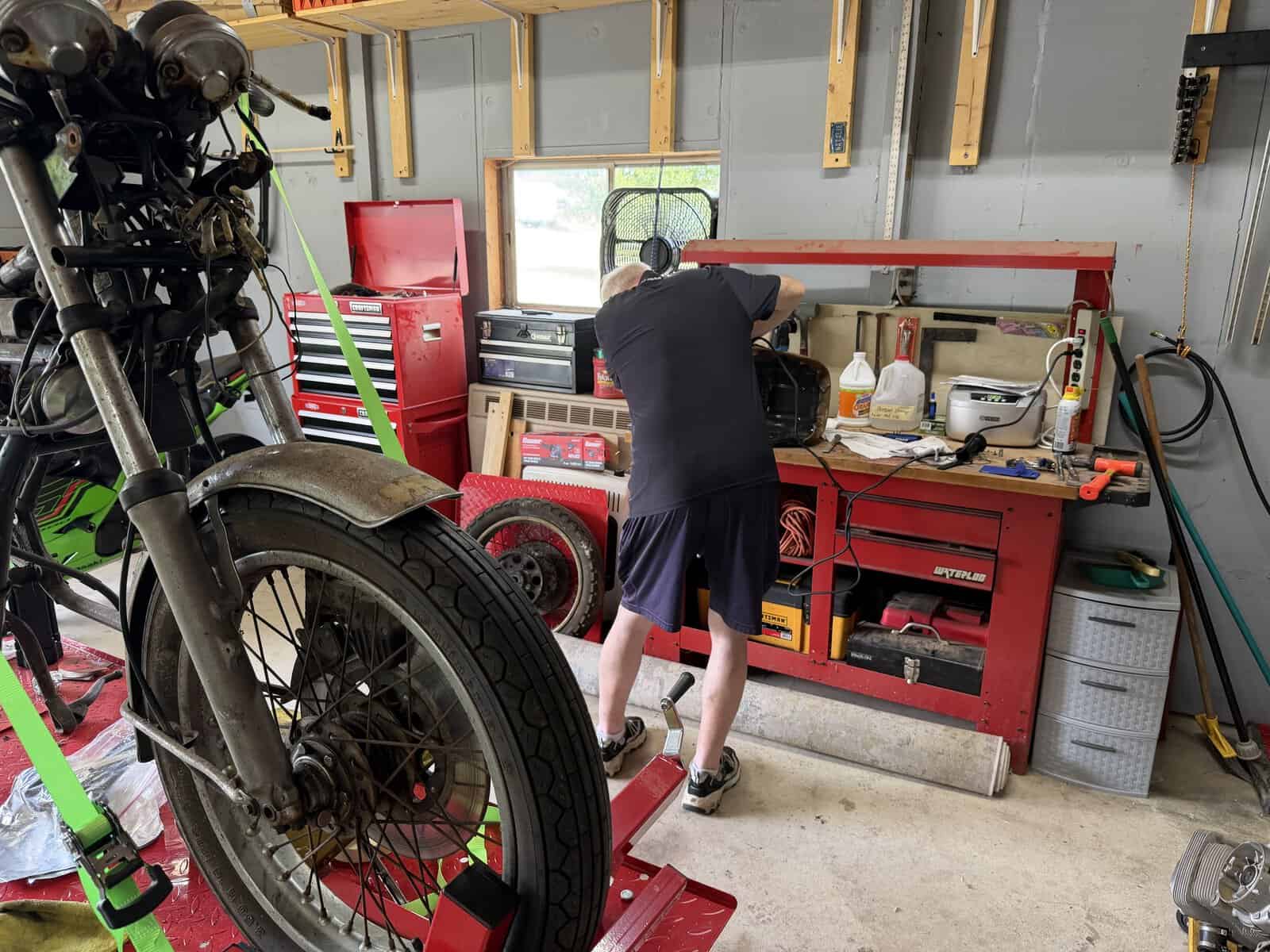
The two fasteners that had been fighting me since finding out how bad the CB750F seat pan really was finally came free, not because I found a clever solution but because my dad showed up with a grinder while I was building the bench and just dealt with them. The bimetal blade for the oscillating tool I picked up at Harbor Freight is still in the package. Sometimes having a parent who has owned and worked on this exact bike is worth more than any tool purchase.
With the fasteners gone and the strap free, the seat cover pulled away. The foam underneath looks rough but actually survivable, which is one small piece of good news in an otherwise sobering session.
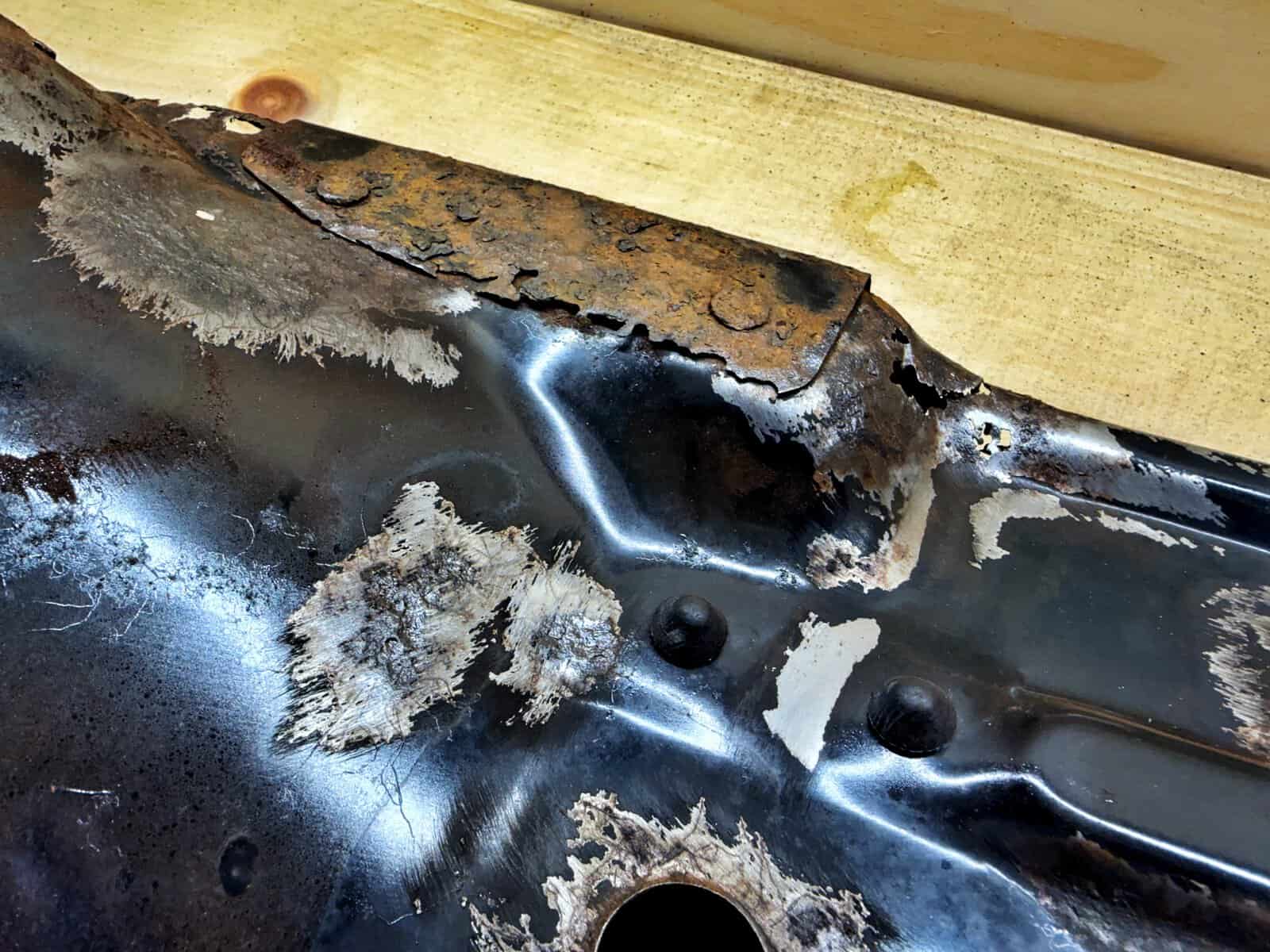
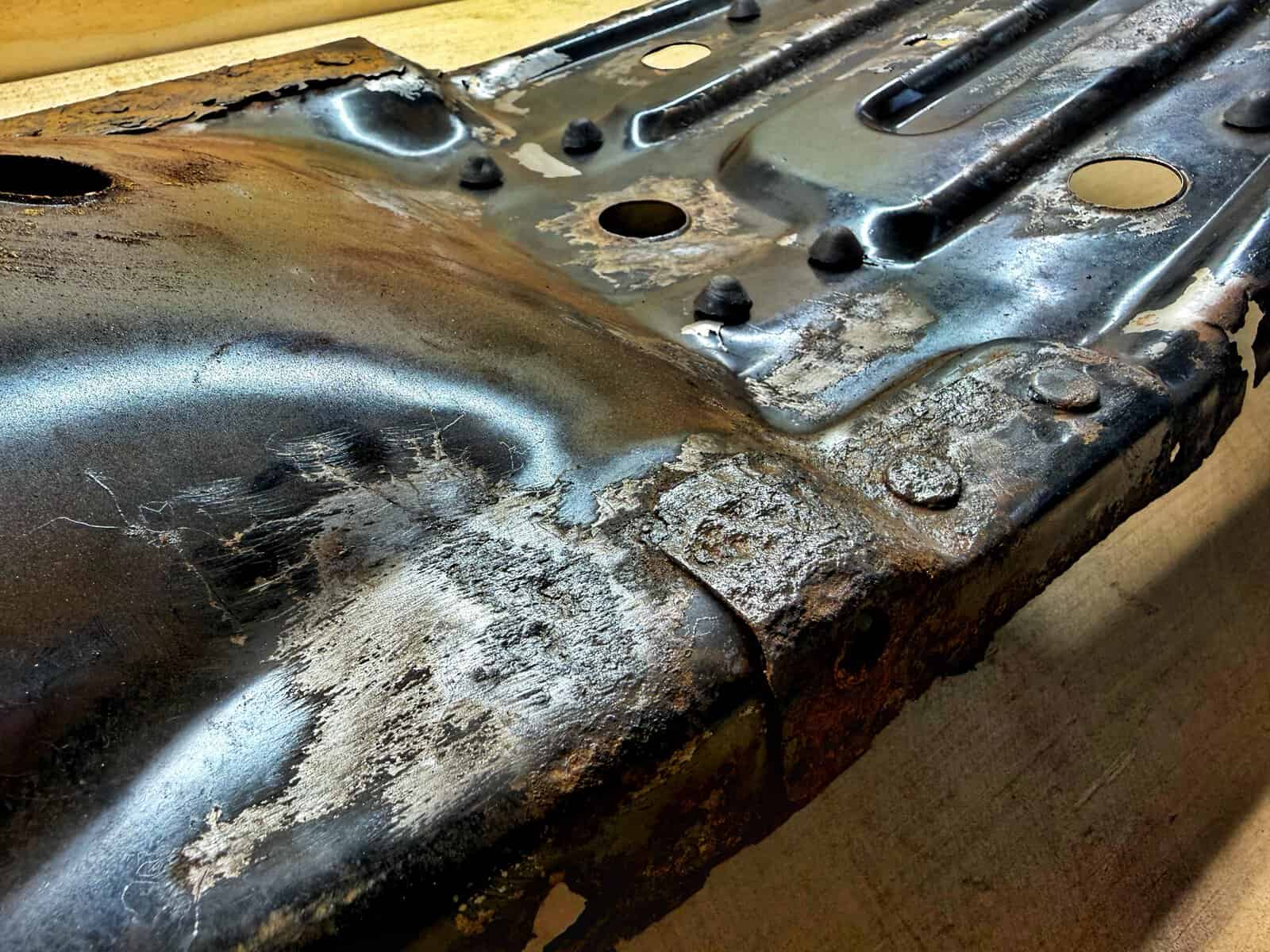
What the CB750F Seat Pan Rust Actually Looks Like
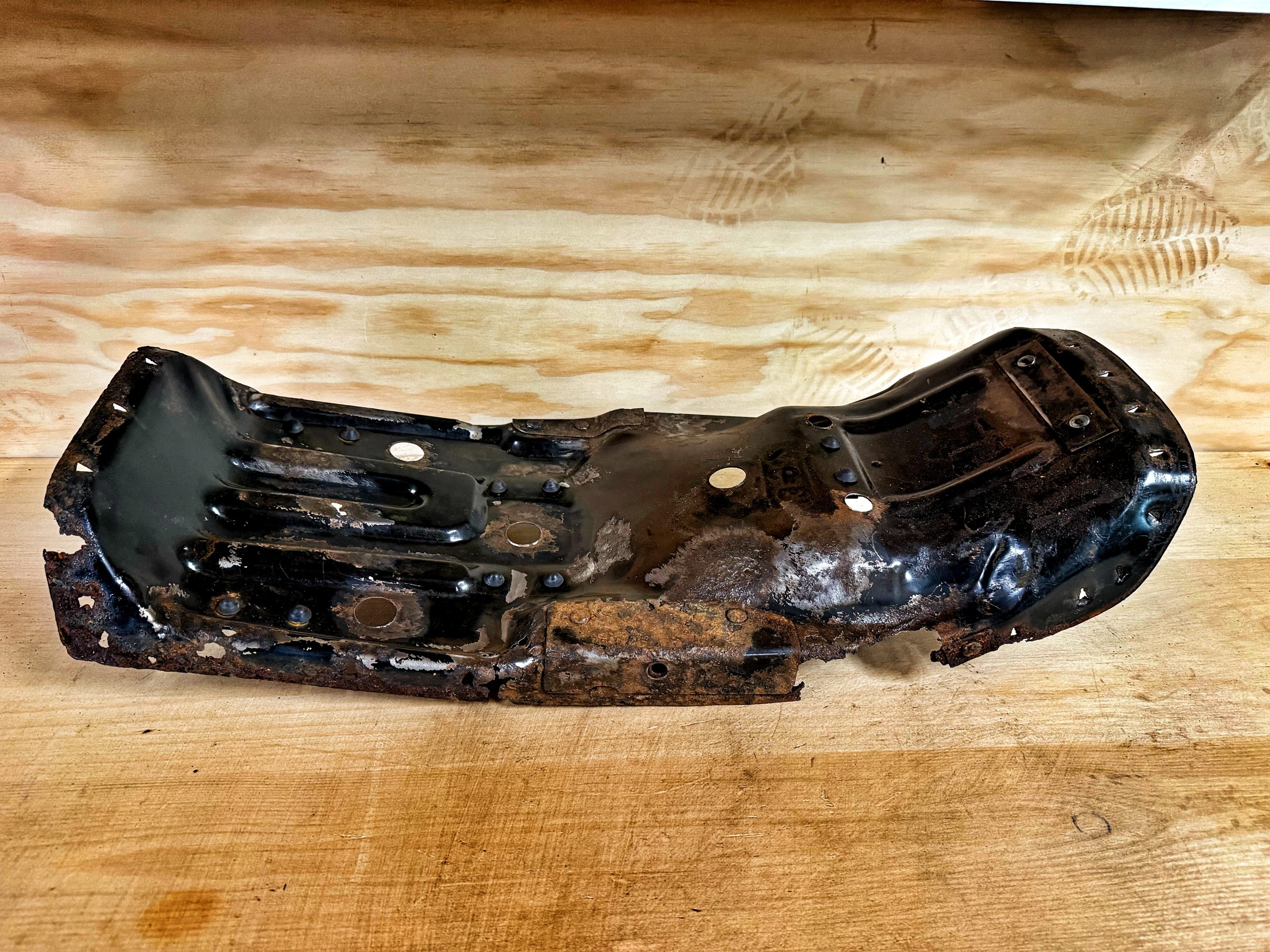
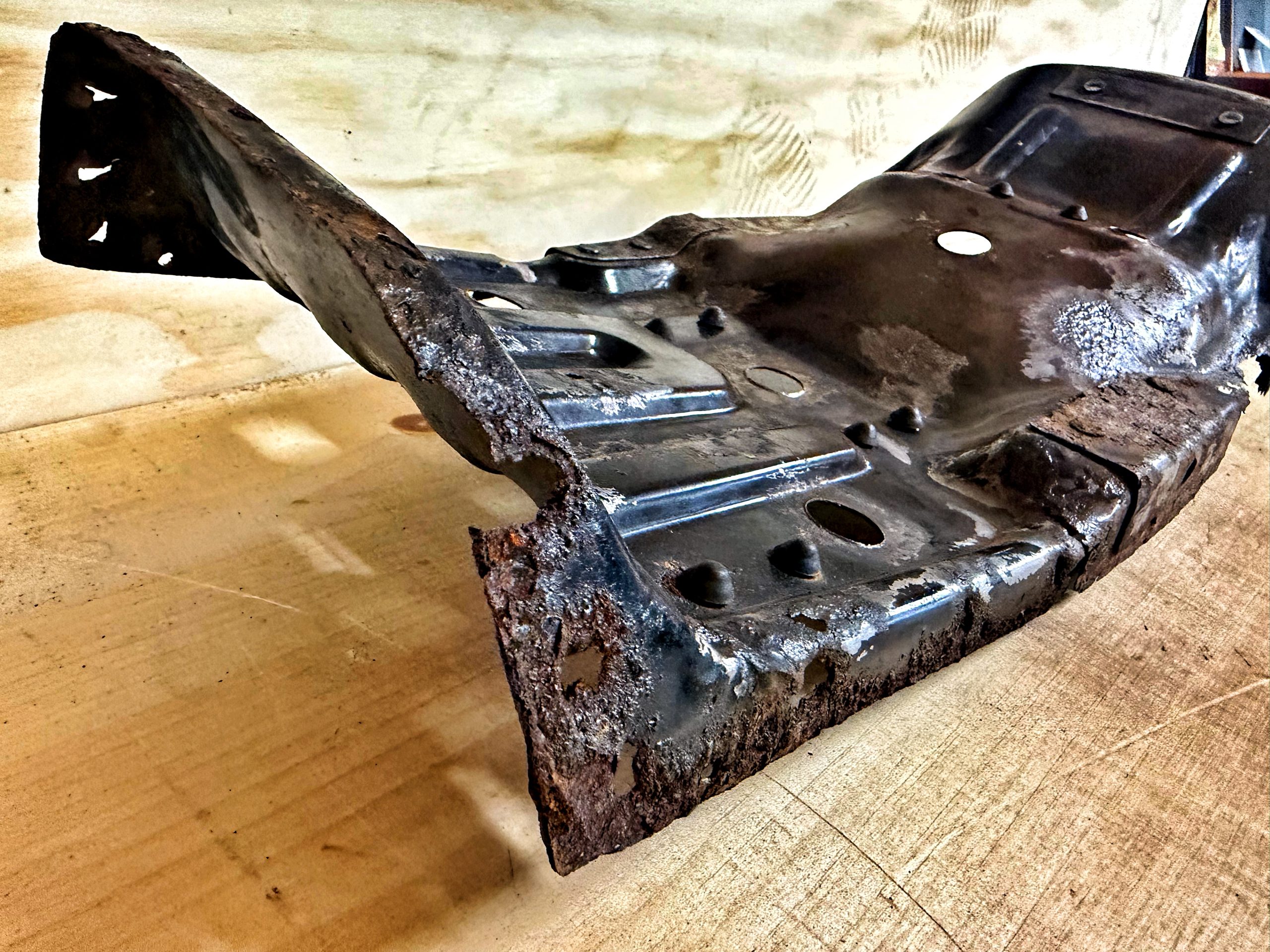
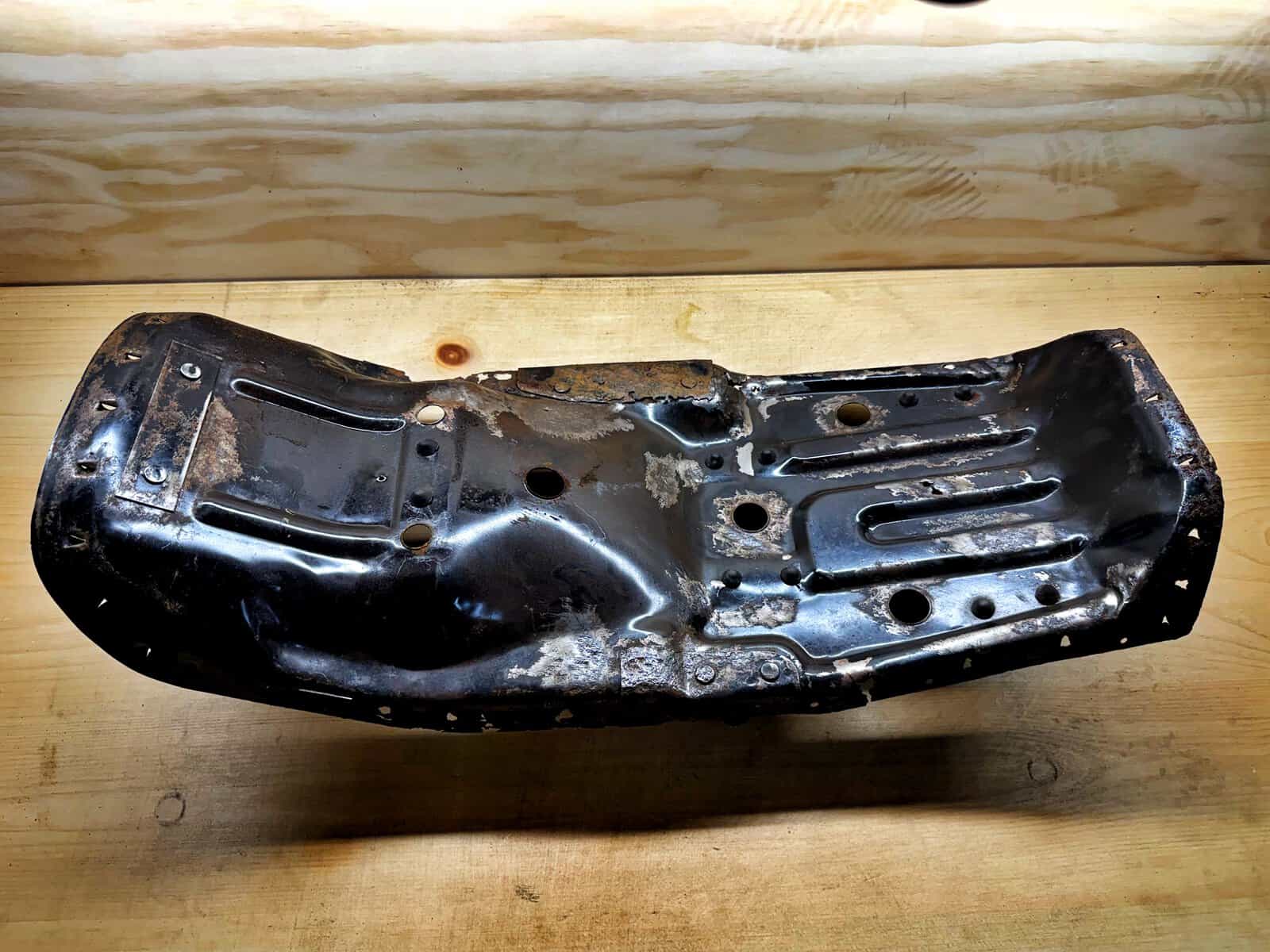
This is where things got real. Here is what I found working around the pan with a wire wheel in a drill:
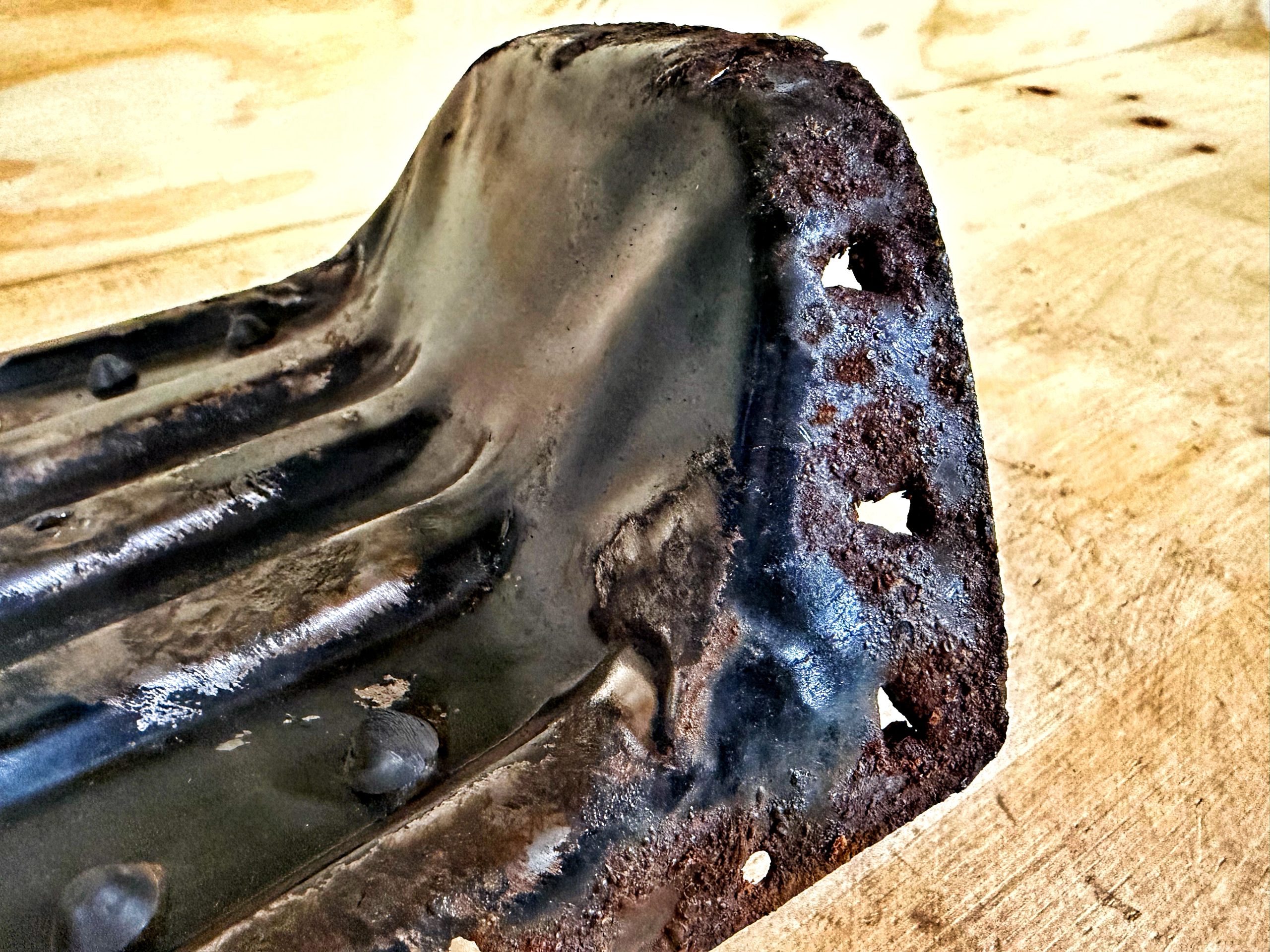
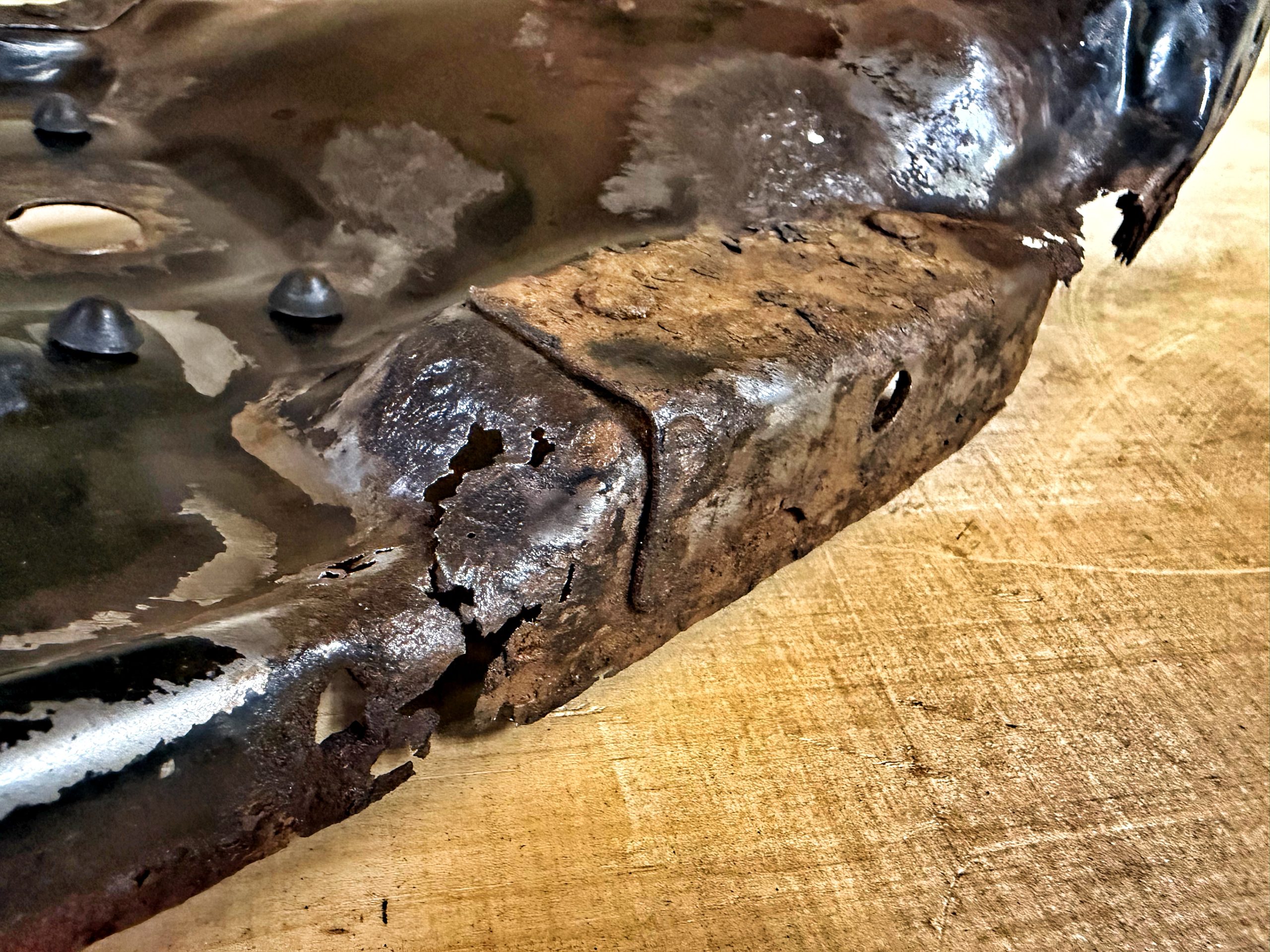
The hinge bracket area has significant rust and at least one spot where I can see daylight through a small hole. That one might still be patchable with the JB Weld steel stick if I can grind back to clean metal around it first.
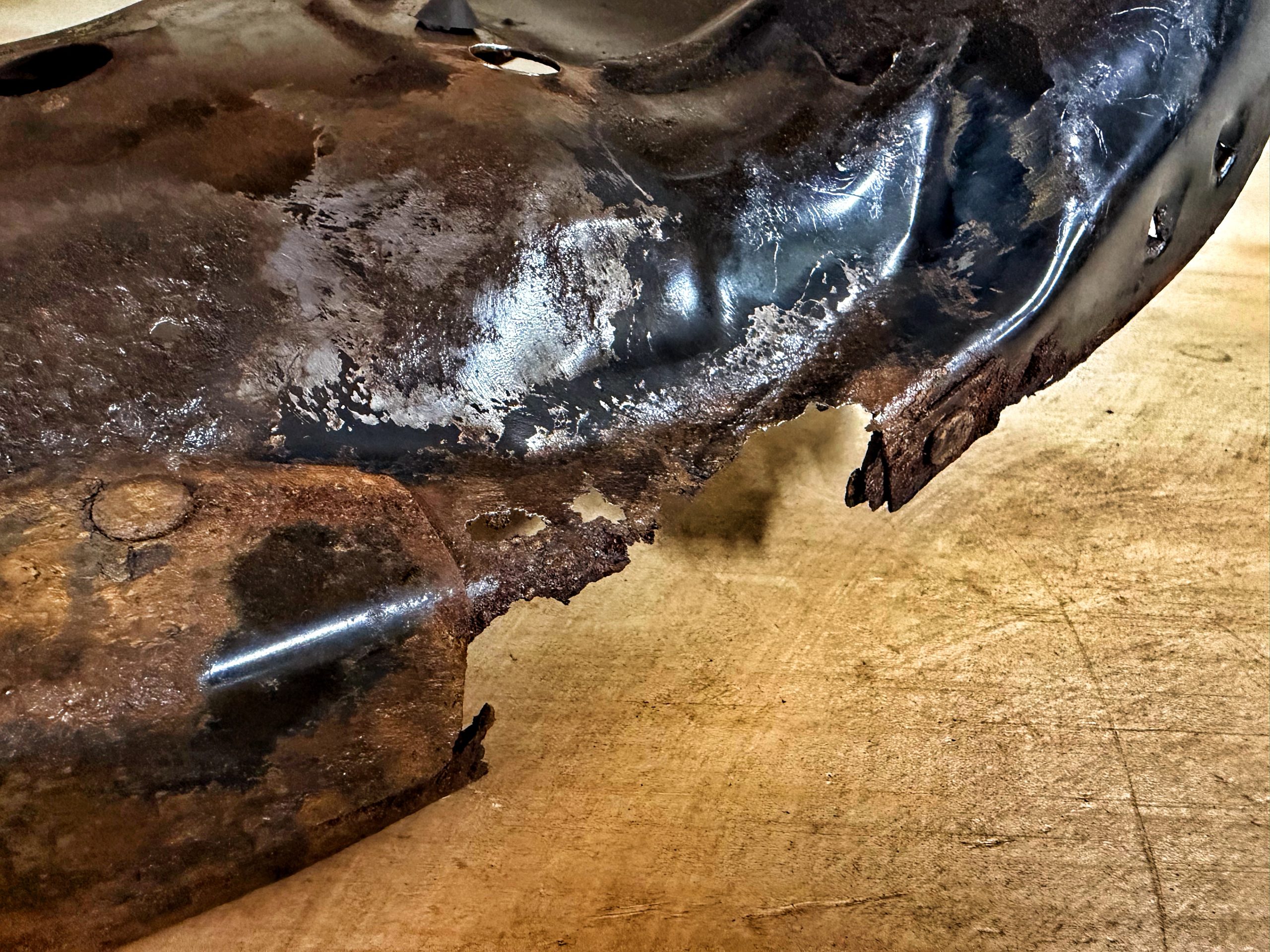
There are sections where the metal is not just rusted but structurally gone. Nothing left. In those areas I am looking at cutting out the bad section, fabricating a replacement piece from sheet metal, and welding it in. That is a different category of repair than filling a hole with epoxy.
There is also a crack in the seat pan where corrosion and stress have pulled two sections apart, leaving them slightly misaligned. Getting that closed up will require some persuasion and welding, not just surface treatment.
Some of the damage has a strange appearance, almost like previous repair attempts. There are spots that look less like natural rust progression and more like someone may have gone at this with a stick welder at some point in the past. I could be wrong about that since I am not a metal worker, but the texture in a few areas does not match what I would expect from rust alone.
The triangular tabs punched into the pan are what the seat cover hooks onto during installation. Some of those tabs are gone where the rust has eaten through the surrounding metal. My dad thinks the best approach for the sections that need to be cut out is to replicate the tabs in the new patch material by cutting shallow V shapes with a Dremel and drifting them through with a punch, rather than trying to repair broken tabs on deteriorated original metal.
The Welding Question
All of this points to one unavoidable conclusion. I need to either find someone to weld this seat pan or learn to do it myself.
Jeff completed the gas tank weld repair and watching him work made me want to have that capability in my own shop. A flux core welder that runs on a standard 20 amp 110 volt outlet would handle everything I need for this seat pan. Harbor Freight carries the Titanium line and I was looking at a model that can run on either 110 or 220 for around $600, which is well outside what I want to spend. They also have a straight flux core 110 volt unit for around $175 that would do the job, but I missed a 30 percent off sale on it that would have made it a no-brainer. The $175 unit plus welding wire, gloves, and a helmet adds up, but it is still a fraction of what the higher end unit costs.
For now I am holding off on the welder purchase and focusing on what I can do without one. That means templating the sections that need to be replaced so I have patterns ready, cleaning up the rust on the areas that can be treated rather than cut, and waiting until I have either a welder or a plan to get the patch work done by someone who does.
Gas Tank Update
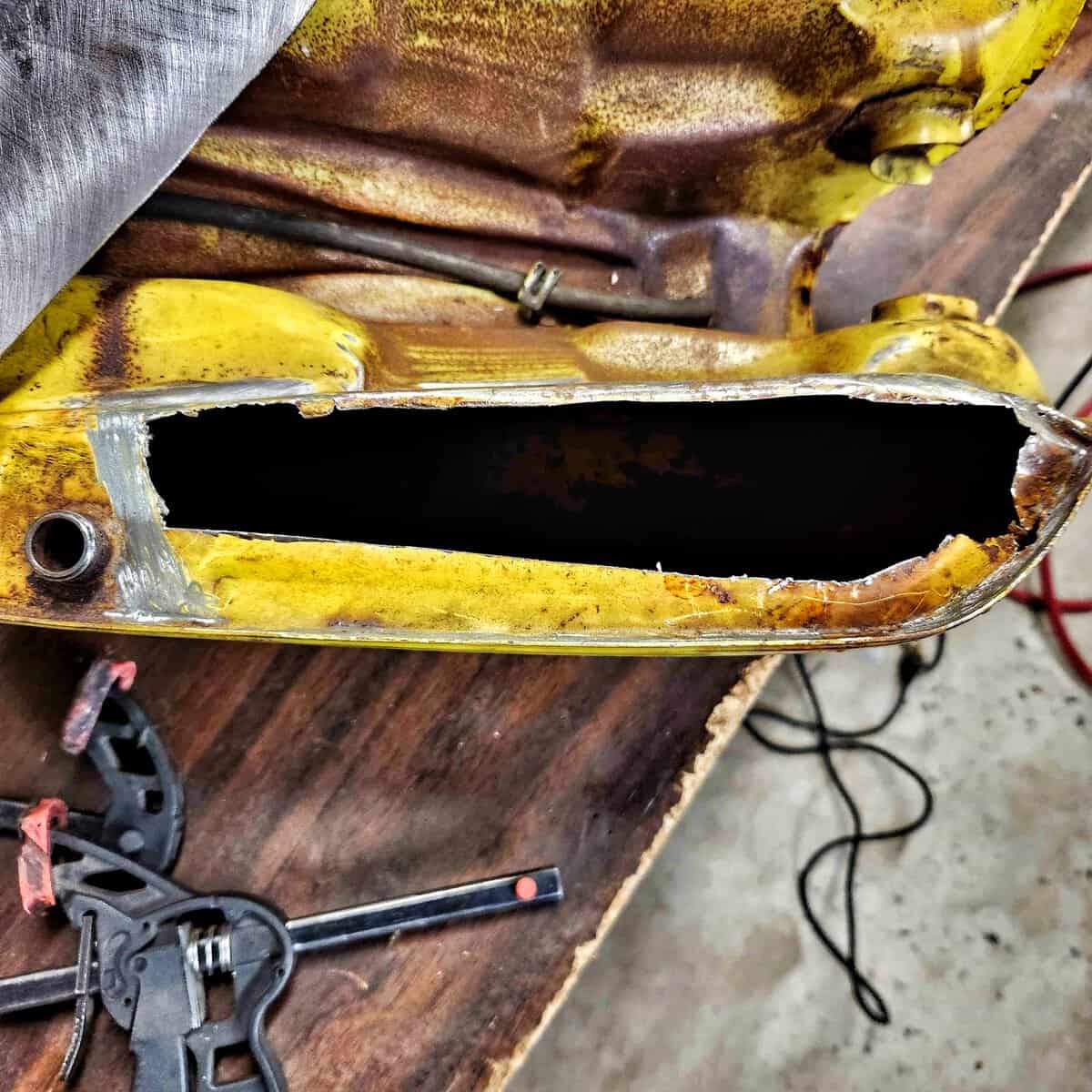
The tank is almost back from Jeff but with a wrinkle. He ran into some pinhole leaks while welding and there is also some leaking around the petcock area that may be related to brazing that let go from the heat of the welding process. He is working through those, so the return is pushed back slightly.
The other issue is cosmetic. There is burnt paint on the bottom of the tank from the welding heat that needs to be addressed. One option is to mask off a section of the bottom and paint a black stripe to cover it, creating what would look like an intentional design detail. The other option is a full tank repaint, which is more involved than I had hoped because the original yellow is apparently a candy color requiring a silver base coat underneath before the color goes on. A simple aerosol rattle can is probably not going to cut it for a proper match. I know someone with an auto body shop, so that avenue is worth exploring if the full repaint route ends up being the right call.
What Is Next on the CB750F
The battery box is coming out next, followed by the wiring harness cleanup using that vinegar and salt method I have been planning since seeing it on another builder’s channel. The seat pan is on hold until the welding question gets resolved one way or another. And the tank comes back from Jeff later this week.
Ride With Me
If you want to see how the seat pan repair and the tank cosmetic decision both play out, subscribe to the WaltInPA YouTube channel so you do not miss either one. If you know someone who has tackled a rusted out seat pan on a vintage Honda and found a good path through it, send this one their way and have them leave a comment. And if you want to follow along with the full CB750F Restoration as it moves toward reassembly, come hang out in the WaltInPA Discord where good people talk through exactly this kind of problem.
Recent Posts
There is a lesson buried in this episode and it is not a subtle one. The CB750F seized caliper piston that I had been fighting since removing the rear brake caliper weeks ago, the one that survived...
There's a certain kind of ride I love more than any other. No plan, no route, no destination. You're rolling along and a road catches your eye, so you take it. That road leads to another one that...