
Nobody on Kickstand Conversations started out with good gear. Trekkie rode for years in a knockoff waxed jacket. Goofy’s first helmet was a $29.99 Pep Boys special from 1989. I started out in a helmet, jeans, and steel toe work boots. This week Trekkie, Goofy, Scott, and I talked about how we each got from there to what we wear now, and what it takes to put together budget motorcycle gear that still does its job.
The conversation wandered through helmet standards none of us fully understand, a lot of opinions about gloves, one very expensive pair of boot covers, and a few practical lessons about buying and sizing. There are jokes and tangents in the video that I left out of the write-up, so here’s the recap.
If you’d rather hear the whole conversation, tangents and all, hit play on the full episode above.
Table of Contents
How We Started: Cheap Helmets and Whatever Was in the Closet
Goofy kicked things off by admitting he was one of the guys in our group who didn’t wear much riding gear. Helmet, gloves, jeans, a T-shirt, and whatever closed-toe shoes he had. Nobody he rode with wore gear either, so it never felt normal to him.
Trekkie had the best origin story. Back in the 90s in the UK, he rode in a cheap knockoff of a Barbour, which is a wax jacket that he says offers basically zero protection. He wore whatever work clothes he had on that day, since he rode to work, and a no-name helmet with hideous graphics that cost him £45. At the time that felt like a big investment. The one exception was a good pair of gloves, because his hands are big and he needed a shorter finger length. Those gloves cost more than the rest of his gear combined.
Goofy’s 1989 Pep Boys helmet was $29.99, and later he switched to a chrome skid lid in the early 2000s because it looked cool. Trekkie’s point was that none of us were thinking about safety back then. He just wanted to be on a bike for as little money as possible, and he rode the wheels off it.
What Finally Got Us to Gear Up
For Trekkie, it was the Pennsylvania motorcycle safety course. The course requires a minimum of gear (helmet, gloves, boots, jeans, and a jacket), so he bought all of it, plus rain gear when the class turned into a downpour. He chose real boots with ankle protection and real gloves with palm sliders. He’d also heard, and he was upfront that it’s secondhand, that your hands hit the pavement first when you go down. That’s why he wouldn’t skimp on gloves.
Scott’s turning point was an article he read about a rider who slid down the road in jeans. It scared him off regular jeans, and he’s still working on breaking that habit. Even now, he said some of the riding jeans out there worry him when he looks into them.
Goofy said this is really the first year he’s been gearing up. He’s getting older, and he wants to be safer (he won’t say wiser). He bought a budget-friendly armored mesh jacket and a pair of riding jeans, and he wore the jeans for a full day at the Martin Moto Modern Classics Ride In.
The “Does Gear Even Matter?” Debate
I told the guys about a rider I talked to who wore full gear on his Goldwing, then bought a Harley and switched to no helmet and a backwards ball cap. His reasoning was that he’s seventy, and he doesn’t know how much gear would help if he went down. Goofy’s take was that gear will at least save you some road rash, but a seventy-year-old is brittle either way. He also pointed out that you can die at fifteen miles an hour in full gear, depending on how you land and what you hit.
My view is that motorcycles are inherently dangerous, and gear is your chance to reduce that risk a little. I have young kids at home, so I’d rather be sweaty and uncomfortable in the summer than need gear I didn’t wear. Scott backed that up with a friend in his club who was fully geared when he crashed and credits it for still being around, though he was quick to say not everyone gets that lucky.
Helmet Standards Are a Confusing Mess
Goofy’s take was that DOT, the US standard, doesn’t really amount to much of a certification. I’d heard the same thing, so when I went shopping for a new helmet I figured Snell was the answer. Then I learned Snell has its own problems, and that ECE is the one people point to, with a series number that tells you which version of the standard the helmet meets. The bottom line for me was that a safety sticker on the back doesn’t mean quite what you’d think it means.
Trekkie’s understanding is that the European standard gets updated every few years with new tests, and that the certification is expensive. Plenty of US manufacturers skip it unless they’re selling in Europe. So the same US-made helmet might meet the European standard over there and only DOT over here, which he finds ridiculous. He did concede that European and American head shapes differ a bit, so there’s some logic to two helmet styles, just not to skipping the better standard. Goofy pointed out that racing has always required Snell, so he’d assumed it was the gold standard. Nobody at the table was certain about any of this, and I’d do your own reading before you buy.
On price, Goofy’s Scorpion was $300, and Trekkie said a $200 full face is going to protect you better than a $300 half helmet. His feeling was that $300 for a full face is about as low as he’d go, though he also admitted the helmet he ended up with was the one that fit his head. Scott ditched a pile of Bilt helmets (they ran $100 to $150) for a Scorpion and a Bell MX-9, and says both are night and day better. Fit matters as much as the sticker.
What We Actually Wear Now
Jackets and Pants
Scott has been slowly moving away from his old heavy textile gear. His long-distance jacket now is a Tourmaster Trek Jacket , which he said was on closeout for $139.95 when we recorded. It’s heavy and runs hot, but it has a rainproof liner and lots of pockets, and he calls it his do-it-all jacket. He also bought his first set of Klim pants at BMW of Detroit and still wears armored pants from Cycle Gear.
Trekkie has a Joe Rocket jacket he’s had since 2020, and he likes that it has a liner. For cold and wet weather he throws a big rain jacket over almost anything, which blocks the wind well (with some buffeting). Goofy’s cold weather answer is a heavy leather jacket from 2001.
I have three jackets. My summer jacket is an Icon Contra 2, a mix of mesh and perforated leather, and it’s like wearing a little air conditioner. My old discontinued Icon One-Thousand isn’t heavy enough for cold weather, so I layer up under it. A few weeks ago my dad stopped by and handed me the Joe Rocket jacket I wore when I first started riding. It still fits, it’s a big bright blue thing, and it has a real full liner with sleeves, which my other two jackets don’t. I don’t know if they just made them better twenty years ago, but it’s heavier and feels better built.
On pants, I own riding jeans and riding pants. I’m a little skeptical of my riding jeans, since I suspect the aramid is in the stitching rather than a panel that would survive a real slide. Goofy’s jeans have aramid panels sewn in at the hips, seat, knees, and front of the legs, which he could see when he turned them inside out. Either way, I like the knee and hip armor.

Boots
I wear TCX Jupiter 4 boots, and I’m happy with them except for the tread. It was mild out of the box and is now worn down after more than four years. Standing on a bit of gravel in a parking lot feels like standing on BBs, and I’ve had my foot slide. That’s a pucker factor of about ten. The soles are also hard, so they aren’t fun to walk in. I’d buy TCX again in a heartbeat if they made a version with more tread.
Trekkie wears TCX Street 3s in the summer, which are flat-bottomed but comfortable, and Revit Pioneers when it rains.
Gloves and Staying Warm
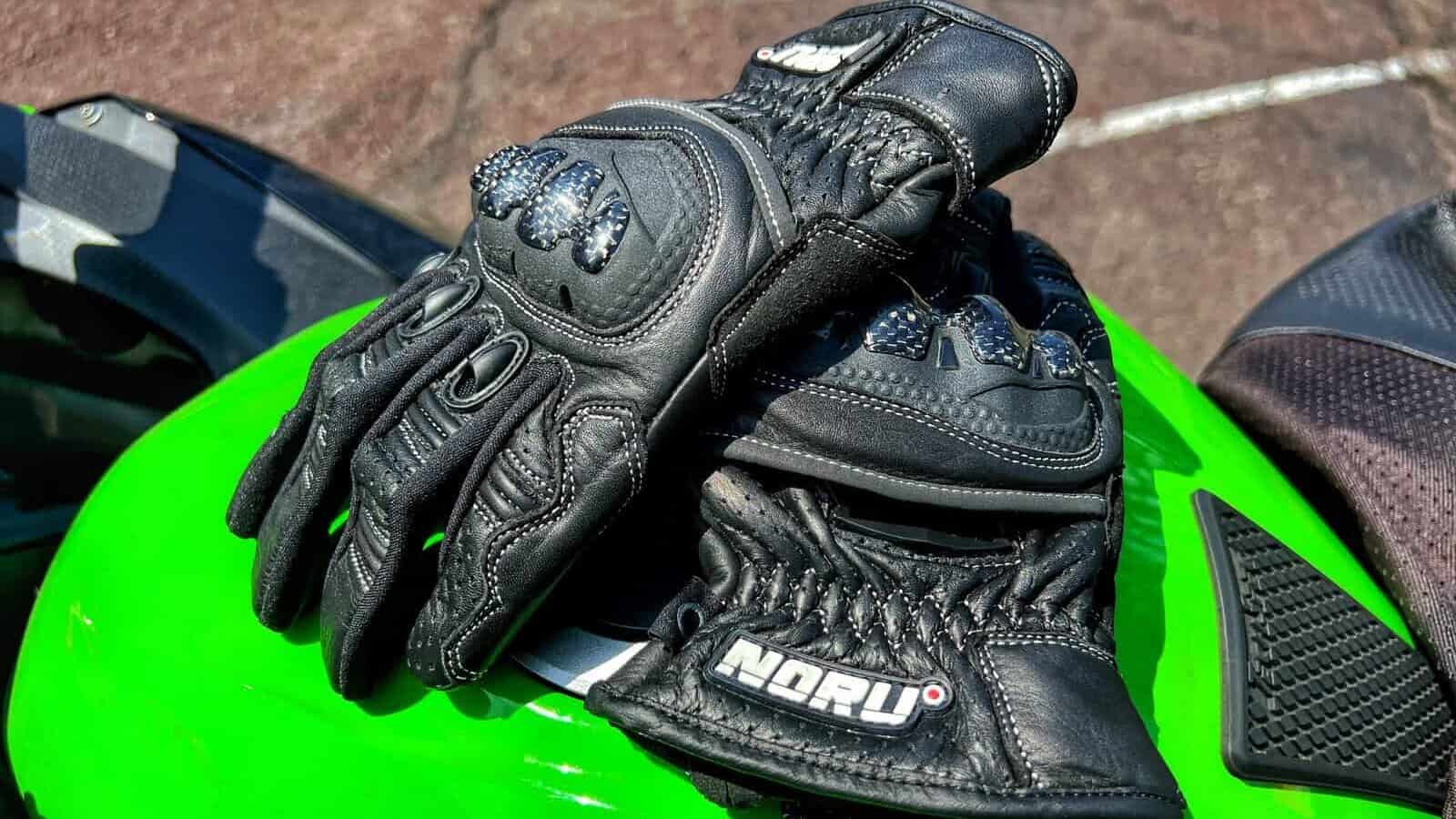
Gloves got the most opinions. I just retired my Scorpion leather gloves because the Velcro wore out at the wrist. I replaced them with a cheap $35 pair from Martin Moto that has been surprisingly good, though I wish they had a palm slider. I own a few other pairs I don’t love. One is too thick, and another has such coarse stitching inside that it feels like it’s stabbing me after more than a year of breaking in.
Goofy wears his perforated leather gloves with knuckle protection and palm sliders about 99.5 percent of the time. His heated gloves were a $30 TikTok purchase, and he said that tells you how good they are. Trekkie splits his between a pair for weather with good protection and cooler ones with shorter wrists. He also likes rolling his sleeves up for airflow, which Goofy pointed out kind of defeats the purpose of armor.
My heated gloves warm the back of the hand, but my fingertips still get bone-chilling cold on a naked bike, and the battery doesn’t last long. Trekkie’s heated grips warm his palms and do nothing for his fingertips. Scott said grips are about to earn their keep with the mornings getting cooler, and he thinks handguards would let him keep his regular gloves instead of stepping up to a thicker pair.
We were unanimous on two things. We all hate the muff-style mittens that wrap around the controls, because none of us wants our hands trapped or blind to the switches (Trekkie said he’d hit the horn constantly). And I cut open the stitching that bands the ring and pinky fingers together on one pair of gloves, because it gave me a claustrophobic feeling. It’s supposedly a safety feature, but I couldn’t stand it.
The $150 Mistake
Trekkie had the best regret story. During his safety course at a Harley dealership, the rain was so bad that water was getting into his supposedly waterproof boots. On his lunch break he walked into the dealership store and paid $150 for slip-on rain covers, and he never wore them again. He has no idea where they are. He said some people in that class were tying plastic bags around their feet, and Goofy’s stance was that plastic bags are cheaper than $150. The rest of us didn’t have many regrets. I dreaded wearing my textile pants because they’re so hot, but I wear them in winter. The rest of us mostly bought cheap enough that we didn’t feel bad about it.
(The plastic bag conversation turned into a Wonder Bread bag story that’s better in the video.)
Budget Motorcycle Gear, Sizing, and Buying in a Store
My closing argument was that budget motorcycle gear is a real option. You don’t need a $1,000 helmet, a $600 jacket, $500 pants, and $400 boots. There’s closeout gear, discount gear, and maybe even used gear, though Goofy wasn’t sold on used. He mentioned a $99 dedicated riding sneaker we saw at the Martin Moto meetup, and I mentioned my $35 gloves. You just have to look.
Trekkie’s rule is to buy gear in a store unless it’s exactly the same thing he already owns. He wants to try it on and get help with fit. Goofy agreed, because sizing between brands is all over the place. He bought his jeans online and worried the whole time, and he said a jacket from another brand ran so small it messed with his head a bit.
Inseam is a real problem for those of us with shorter legs. I ordered riding pants online, thinking I’d just cuff them, and the knee armor ended up halfway down my shins. Joe Rocket makes riding jeans in short inseams, which is why I wear them. Goofy noticed riding jeans usually come in inseam lengths while riding pants are often waist-only. He bought a 32 instead of his usual 30 to keep the leg from riding up. We both said the knee armor feels low off the bike but sits where it should once you bend your knees.
Commuting in gear is its own hassle. I used to stuff a change of clothes and shoes into a backpack, which was miserable. Now I wear my riding pants over shorts or jeans, swap my boots for sneakers I keep at work, and I’m done. Goofy skips gear on his way to work because he’s in a uniform and doesn’t want to spend extra time changing.
Getting Seen: Reflective Gear
After our covered bridges ride, it bothered me that I heard Scott say over the comms that a car was coming and he couldn’t see me. I was standing in the middle of a bridge in all dark gear. If I buy new gear, I want reflective panels where they count.
Trekkie was shown the difference between reflective and retro-reflective material and was struck by how much better the retro-reflective stuff is. He wants some in his next gear, maybe a panel on a jacket or the back of a helmet. Goofy’s mesh jacket has reflective stripes on the arms, and his jeans have reflective material inside the cuff, but he’s not doing fluorescent green. Scott went with a bright green helmet on purpose, so people can see him at night.
Ride With Me
If you like this kind of conversation, subscribe to the WaltInPA YouTube channel for more riding content, and send this post to a friend who rides. You’re also welcome to come hang out in the WaltInPA Discord, where good people talk about riding.
The rest of the crew have channels worth your time too. Check out Trekkie’s channel, TrekkieMoto, Goofy’s channel, Goofy Bastard, and Scott’s channel, Scott’s Moto Adventures.
Recent Posts
There's something going on in the moto content space right now and I think it's worth talking about. I've been watching some of my favorite channels lately and two videos caught my eye back to back....
MT-09 Reliability Issues After 12,000 Miles (And Why I'm Finally Getting Inspected)
I've got a confession to make. Right now I'm riding dirty. Both my bikes are overdue for state inspection, and it finally pushed me to sit down and think honestly about Yamaha MT-09 reliability...